
Kitchen-only class
A focused lesson with less transit and more controlled timing. It may teach techniques efficiently but offer less context about ingredient sourcing.
SuitsShort city stays, families, and travelers who prefer a predictable setting
Compare the teaching, not just the menu
A worthwhile class should fit your interests, health needs, mobility, and schedule. Learn how to compare formats, ask useful food-safety questions, and choose an experience with genuine culinary context.
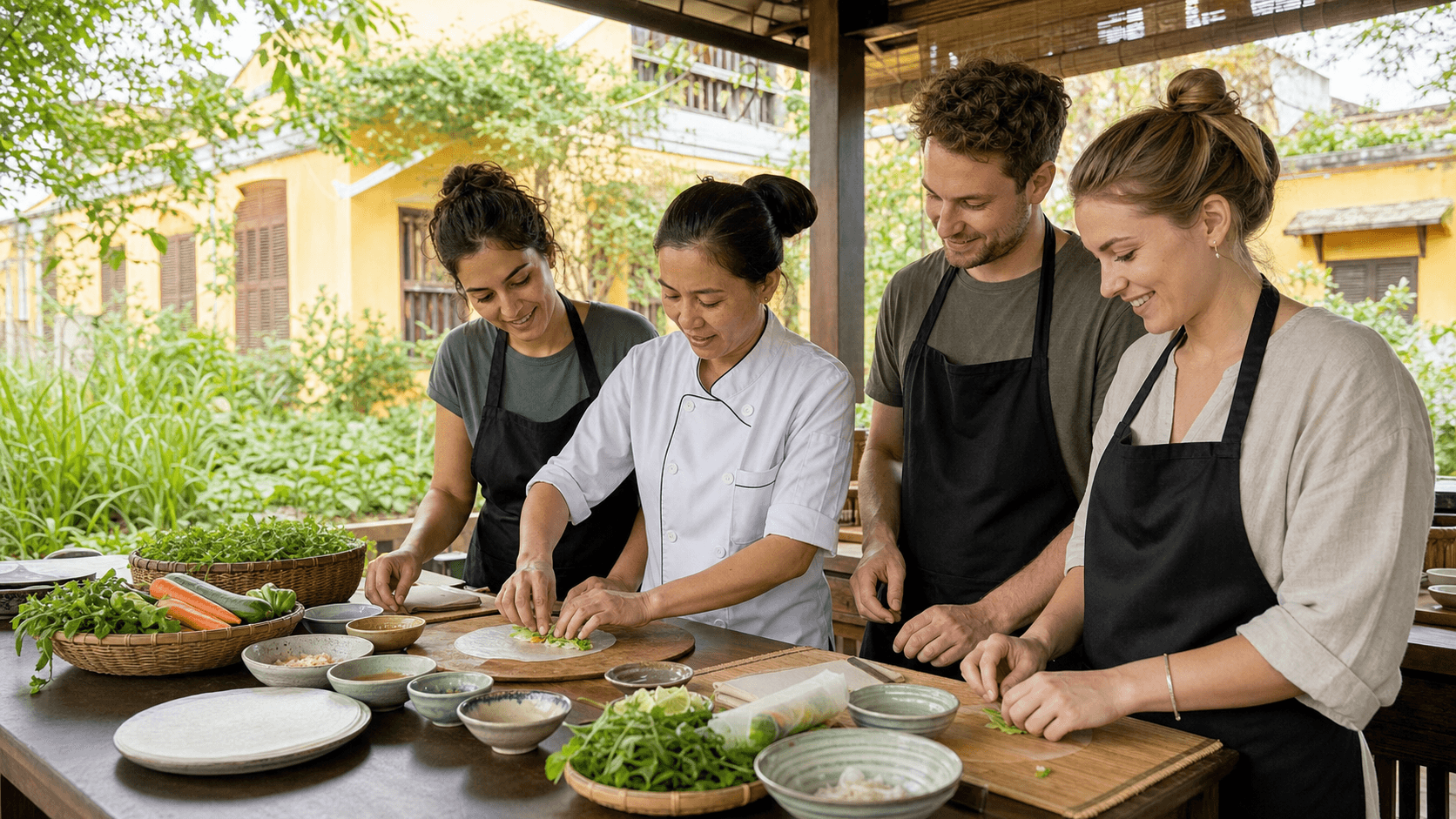
A long activity list does not guarantee a better cooking lesson.
Start with one goal: learn repeatable techniques, understand a regional cuisine, visit a market, share a social meal, or enjoy a family activity. Then compare how much class time actually serves that goal.
Vietnam Tourism highlights cooking as one way to experience Hoi An from market ingredients to the finished meal. Its official Hoi An guide offers useful cultural context, but provider menus, schedules, and standards must be checked directly.
Choose the experience structure before comparing providers.
A focused lesson with less transit and more controlled timing. It may teach techniques efficiently but offer less context about ingredient sourcing.
Adds ingredient identification and local food context. Market surfaces, crowds, heat, smells, and raw products can make the experience demanding.
May include gardens, cycling, boats, or rural transport before cooking. The day is broader than the lesson, so assess weather and mobility needs.
Offers more control over pace, menu, questions, and some dietary requests, although no provider can guarantee suitability without confirming its kitchen process.
Can be social and good value, with a shared timetable and fixed menu. Participation and workstation space vary by group size.
The instructor prepares most of the meal while guests watch, assist selectively, and taste. It is not the same as cooking every dish yourself.
Make the inclusions and limitations explicit.
Request the current menu and identify which dishes each guest prepares, which are demonstrated, and which arrive pre-made.
Ask for the maximum group size, number of workstations, and whether equipment or tasks are shared.
Confirm transport, market or farm visit, drinks, meal, recipes, taxes, cancellation terms, and return point without assuming.
Explain allergies, dietary restrictions, religious needs, disliked ingredients, and cross-contact concerns before paying. A substitution is not automatically safe.
Check walking, boats, bicycles, steps, low seating, heat, ventilation, standing time, knife work, and restroom access.
Look for a class that explains regional ingredients and techniques respectfully rather than using culture as decoration.
They reduce risk; they cannot guarantee that a meal is safe for every traveler.
The World Health Organization’s Five Keys to Safer Food are to keep clean, separate raw and cooked food, cook thoroughly, keep food at safe temperatures, and use safe water and raw materials. Apply them as observable questions during a class.
Look for handwashing, clean work surfaces, clean utensils, and a clear process after touching raw ingredients.
Raw meat, seafood, and eggs should not share boards, knives, plates, or hands with ready-to-eat food without proper cleaning.
Ask the instructor when unsure whether meat, seafood, eggs, or reheated dishes are fully cooked.
Notice whether perishable ingredients are stored appropriately and finished dishes are eaten promptly.
Ask about water, ice, washed produce, and raw garnishes when they matter to your health needs.
“We can remove that ingredient” may not address shared surfaces, sauces, oil, or utensils.
Send the provider the allergy name, severity, cross-contact concern, emergency plan, and exact menu questions. Ask for a written reply from someone familiar with the kitchen.
Repeat the allergy information to the instructor, identify the workstation and utensils, and verify every substitution before cooking begins.
Do not share sauces, boards, oil, spoons, garnishes, or finished plates unless the instructor confirms the process is suitable.
Do not eat the uncertain dish. A social setting, prepaid fee, or language barrier is not a reason to accept avoidable risk.
Use the more detailed food allergies in Vietnam guide to prepare translated information, medication, and a backup meal plan.
Market, farm, boat, and meal time can turn a lesson into a half-day experience.
Eat lightly if needed, carry water, wear closed shoes with grip, tie back long hair, and bring only essential valuables. Confirm pickup, return, weather policy, and what clothing is suitable for heat and cooking.
Avoid scheduling an immediate airport transfer or demanding food tour. Allow time to eat, return, wash, and rest. A cooking class already includes a substantial meal, so another culinary booking may add quantity rather than value.
For a broader food evening, compare the Vietnam night markets guide. For local planning context, see the Hoi An destination guide.
The class should support the route, dietary questions, and traveler pace.
VietnamTour.in can place a private or small-group class inside a customized itinerary, coordinate transport, and communicate questions about menus, mobility, children, and dietary needs before confirmation. Travelers should still reconfirm health-critical details directly with the instructor or provider.
Share your dates, preferred class format, cooking confidence, dietary requirements, and accessibility needs through the trip-planning form. Ask for the current menu, activity sequence, and cancellation terms before paying.
Hoi An is especially known for classes combining markets, gardens, and local dishes, while Hanoi, Hue, Ho Chi Minh City, and other destinations offer different regional cuisines. Choose by menu, format, safety, and itinerary fit rather than a universal ranking.
Usually not, but difficulty varies. Ask about knife skills, heat, individual cooking, and whether the instructor can adjust the pace. Children should have age-appropriate supervision and tasks.
Some may accommodate an allergy, but a changed ingredient does not eliminate cross-contact. Explain the allergy before paying, ask detailed process questions, carry prescribed emergency medication, and decline food when safety cannot be confirmed.
Many can offer vegetarian menus, but fish sauce, shrimp paste, meat stock, shared oil, and garnishes require explicit discussion. Ask for the complete ingredient and preparation process rather than relying on a label.
Choose it when ingredient context matters and you are comfortable with walking, crowds, weather, and raw-food environments. A kitchen-only class may be better when teaching time, comfort, or accessibility is the priority.
VietnamTour.in can place a suitable private or small-group class within a customized itinerary, communicate dietary and mobility questions, and coordinate transport. Travelers should still reconfirm ingredients, cross-contact, and medical needs directly.
Confirm the format, menu, individual participation, hygiene process, dietary limits, physical demands, and timing. The strongest souvenir is a technique—and the context to use it respectfully.
Add a Cooking Class to Your Private Vietnam Tour