Visa Guide

How to Apply for Vietnam Visa Online

Complete Step-by-Step Guide 2025

Applying for a Vietnam visa online is now easier than ever. Follow our comprehensive step-by-step guide to get your Vietnam e-visa approved quickly and hassle-free.
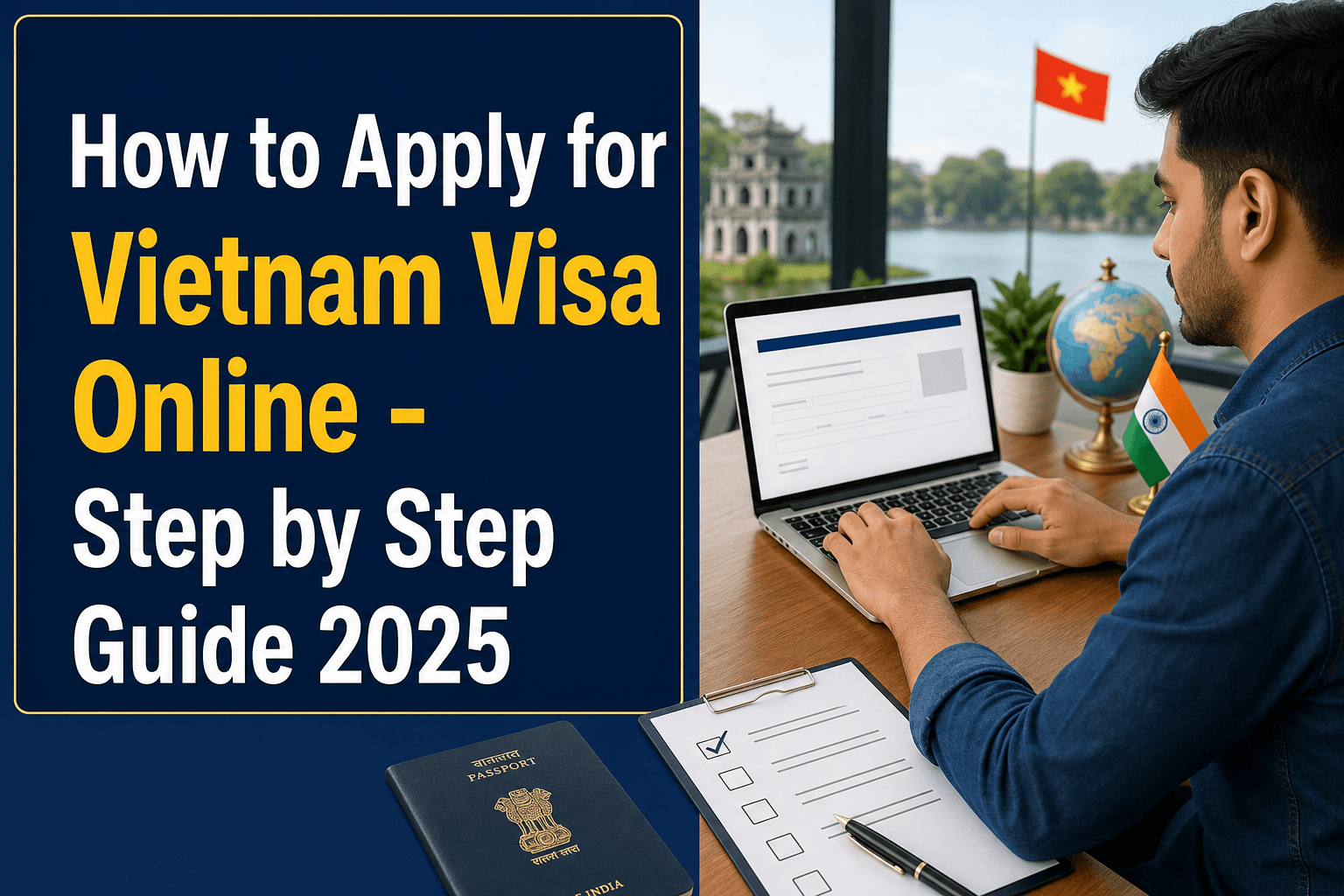
How to Apply for Vietnam Visa Online
⏱️3-5 daysProcessing Time
📅30 daysValidity
🎫Single entryEntry Type
💳$25 USDVisa Fees

Vietnam E-Visa Application Process

Everything you need to know about applying for Vietnam visa online

Vietnam introduced the e-visa system to simplify the visa application process for travelers worldwide. Indian citizens can now apply for a Vietnam e-visa online without visiting the embassy or consulate.

The e-visa is valid for 30 days with single entry and can be used at designated airports, land border crossings, and seaports. The entire application process can be completed from the comfort of your home in just a few minutes.

This guide will walk you through each step of the online application process, required documents, fees, and important tips to ensure a successful visa application.
Vietnam E-Visa

Step-by-Step Application Process

Follow these 7 simple steps to get your Vietnam e-visa

Step 1: Visit Official Website
🌐

Step 1: Visit Official Website

Go to the official Vietnam e-visa portal or authorized visa service provider

Access the Vietnam Immigration Department website or trusted visa service provider

Step 2: Fill Application Form
📝

Step 2: Fill Application Form

Complete the online visa application form with accurate personal and travel details

Enter passport information, travel dates, entry/exit points, and purpose of visit

Step 3: Upload Documents
📤

Step 3: Upload Documents

Upload required documents including passport copy and recent photograph

Scan and upload passport bio page and passport-size photo (4x6 cm, white background)

Step 4: Pay Visa Fees
💳

Step 4: Pay Visa Fees

Make payment using credit/debit card or other accepted payment methods

Pay the visa processing fee (typically $25 USD for e-visa or INR 2,999-3,999)

Step 5: Receive Confirmation
📧

Step 5: Receive Confirmation

Get application confirmation email with reference number for tracking

Save the confirmation email and reference number to track your application status

Step 6: Wait for Processing
⏳

Step 6: Wait for Processing

Processing takes 3-5 business days. Track status using your reference number

Check application status online. You'll receive email notification when visa is approved

Step 7: Download E-Visa
📥

Step 7: Download E-Visa

Download and print your approved e-visa from the portal

Print at least 2 copies of your e-visa to carry during travel

Required Documents for Online Application

Prepare these documents before starting your application

📋

Document Checklist

Ensure all documents are ready in digital format before applying online.

✅Valid passport (minimum 6 months validity)
✅Passport bio page scan (PDF or JPG)
✅Recent passport-size photo (4x6 cm, white background)
✅Flight booking confirmation
✅Hotel reservation details

Important Tips for Online Application

Follow these tips to ensure a smooth application process

✅

Accurate Information

Double-check all information before submitting. Any errors can lead to rejection or delays.

📸

Photo Requirements

Use a recent passport-size photo with white background. Ensure good lighting and clear visibility.

📅

Apply Early

Apply at least 1-2 weeks before your travel date to account for processing time and any potential delays.

🖨️

Print E-Visa

Print at least 2 copies of your approved e-visa and carry them during travel along with your passport.

✈️

Entry Points

Check which airports and border crossings accept e-visas before booking your flights.

💳

Payment

Keep your payment confirmation safe. You'll need the reference number to track your application.

Common Mistakes to Avoid

  • Incorrect Passport Details: Ensure passport number, name, and dates match exactly as in your passport
  • Poor Quality Photos: Use high-resolution photos with proper lighting and white background
  • Wrong Entry/Exit Points: Select the correct airports or border crossings you plan to use
  • Insufficient Validity: Check that your passport has at least 6 months validity from entry date
  • Last-Minute Application: Don't wait until the last minute - apply well in advance
  • Not Checking Status: Regularly check your application status and respond to any requests promptly

Conclusion

Applying for a Vietnam visa online is a convenient and straightforward process when you follow the correct steps and prepare all required documents. The e-visa system has made it much easier for Indian travelers to visit Vietnam without the hassle of embassy visits.

Remember to apply early, provide accurate information, and keep all your documents ready. With proper preparation, you'll have your Vietnam e-visa approved in no time and be ready to explore this beautiful Southeast Asian destination.

FAQs

Yes, Indian citizens need a visa to visit Vietnam. However, the process for obtaining a visa is straightforward, and there are several options available:

Types of Visas for Indian Citizens

1. E-Visa

  • Description: An electronic visa for single entry, valid for up to 30 days.
  • Application Process: Apply online through the official Vietnam Immigration Department website. You will need to fill out an application form, upload a passport-sized photo, and a scanned copy of your passport.
  • Processing Time: Typically takes 3 working days.
  • Fee: Approximately $25 USD (non-refundable).

2. Visa on Arrival (VOA)

  • Description: Available for those arriving by air at major international airports (Hanoi, Ho Chi Minh City, Da Nang, and Nha Trang). It'svalid for both single and multiple entries, with options for 1 month, 3 months, or 1 year.
  • Application Process: You need to obtain an approval letter from a Vietnamese travel agency before your trip. Upon arrival in Vietnam, present the approval letter, along with your passport, two passport-sized photos, and the visa stamping fee at the VOA counter.
  • Processing Time: The approval letter typically takes 2-3 working days.
  • Fee: Service fee for the approval letter (varies by agency) + stamping fee at the airport ($25 USD for single entry, $50 USD for multiple entries).

3. Visa through Embassy

  • Description: Apply for a visa at the Vietnamese Embassy or Consulate in India.
  • Application Process: Submit your passport, completed visa application form, passport-sized photos, and the visa fee. Processing times and fees vary.
  • Processing Time: Typically takes 5-7 working days.
  • Fee: Varies depending on the type and duration of the visa.

Required Documents for Visa Application

  • A valid passport with at least 6 months validity from the date of entry.
  • Passport-sized photos.
  • Completed visa application form.
  • Visa fee payment.

Tips for Indian Travelers

  • Plan Ahead: Start your visa application process at least a month before your planned travel date to avoid any last-minute issues.
  • Check Requirements: Ensure all documents are accurate and meet the requirements specified by the Vietnamese authorities.
  • Use Reputable Services: If opting for Visa on Arrival, use a reputable travel agency to obtain the approval letter.

Conclusion

Indian citizens do need a visa to visit Vietnam, but with several options available, you can choose the one that best suits your travel plans. Whether you opt for an e-visa, visa on arrival, or apply through the embassy, make sure to prepare your documents and apply in advance to ensure a smooth and hassle-free travel experience.

Northern Vietnam (Hanoi, Halong Bay, Sapa)

Best Time: October to April

  • October to November: Autumn is one of the best times to visit Northern Vietnam. The weather is cool and dry, making it ideal for sightseeing in Hanoi and cruising in Halong Bay.
  • December to February: Winter can be quite cold, especially in the mountainous areas like Sapa. However, the weather is generally dry and pleasant for outdoor activities.
  • March to April: Spring is another great time to visit, with moderate temperatures and blooming flowers.

Central Vietnam (Hue, Da Nang, Hoi An)

Best Time: February to August

  • February to May: Spring is the best time to visit Central Vietnam, with warm temperatures and low humidity. It'sperfect for exploring the ancient town of Hoi An and the historic sites of Hue.
  • June to August: Summer is also a good time, especially for beach destinations like Da Nang. However, it can get quite hot and humid.

Southern Vietnam (Ho Chi Minh City, Mekong Delta, Phu Quoc)

Best Time: December to April

  • December to April: This period marks the dry season in Southern Vietnam, with warm and pleasant weather. It's the best time to explore Ho Chi Minh City, the Mekong Delta, and the beaches of Phu Quoc.
  • May to November: The rainy season, with frequent but short-lived showers. While not ideal for beach activities, it'sa good time to experience the lush landscapes and fewer tourists.

Overall Best Time to Visit Vietnam

Spring (February to April) and Autumn (August to October) are generally considered the best times to visit Vietnam as a whole. During these periods, the weather is typically pleasant across the country, making it ideal for sightseeing, cultural activities, and outdoor adventures.

Summary

  • Northern Vietnam: October to April (best: October-November, March-April)
  • Central Vietnam: February to August (best: February-May)
  • Southern Vietnam: December to April

Planning your visit during these times will help you make the most of your trip, enjoying favorable weather and experiencing the rich culture and natural beauty of Vietnam.

1. Ha Long Bay

A UNESCO World Heritage site, Ha Long Bay is known for its emerald waters and thousands of towering limestone islands topped with rainforests. A cruise on a traditional junk boat is a must to explore the stunning bay, caves, and floating fishing villages.

2. Hanoi

The capital city of Vietnam, Hanoi is rich in history and culture. Key attractions include the Ho Chi Minh Mausoleum, the One Pillar Pagoda, the Temple of Literature, and the bustling Old Quarter with its narrow streets and traditional shops.

3. Hoi An

This ancient town is a UNESCO World Heritage site famous for its well-preserved architecture, lantern-lit streets, and tailor shops. Key attractions include the Japanese Covered Bridge, the Old House of Tan Ky, and the vibrant Hoi An Night Market.

4. Ho Chi Minh City (Saigon)

The largest city in Vietnam, Ho Chi Minh City is a bustling metropolis with a mix of old and new. Popular attractions include the War Remnants Museum, the Cu Chi Tunnels, the Notre-Dame Cathedral Basilica of Saigon, and Ben Thanh Market.

5. Hue

Known for its historic sites, Hue was the capital of Vietnam during the Nguyen Dynasty. Key attractions include the Imperial City, Thien Mu Pagoda, and the Tombs of the Emperors. A boat ride on the Perfume River is also a popular activity.

6. Sapa

Located in the northern highlands, Sapa is known for its stunning terraced rice fields, picturesque villages, and cultural diversity. Popular activities include trekking to ethnic minority villages, visiting the Sapa Market, and exploring Fansipan, the highest peak in Indochina.

7. Mekong Delta

The Mekong Delta is a vast network of rivers, swamps, and islands in southern Vietnam. Visitors can explore the floating markets, traditional villages, and lush landscapes by boat. Key attractions include Cai Rang Floating Market and Vinh Trang Pagoda.

8. Phong Nha-Ke Bang National Park

A UNESCO World Heritage site, this national park is home to some of the world's most spectacular caves and grottoes. Key attractions include the Phong Nha Cave, Paradise Cave, and the Son Doong Cave, the largest cave in the world.

9. Phu Quoc Island

Known for its stunning beaches, clear waters, and tropical landscape, Phu Quoc Island is a popular destination for relaxation and water activities. Key attractions include Sao Beach, Long Beach, and the Phu Quoc National Park.

10. Nha Trang

A coastal city known for its beaches, diving sites, and vibrant nightlife. Popular attractions include the Po Nagar Cham Towers, the Long Son Pagoda, and the Vinpearl Land amusement park.

Clothing

  • Lightweight Clothing: Pack breathable, lightweight clothing made of cotton or linen to stay cool in the tropical climate.
  • Layers: Include layers like a light jacket or sweater, especially if you plan to visit northern regions or mountainous areas where it can get cooler.
  • Comfortable Shoes: Bring comfortable walking shoes or sandals for exploring cities and natural sites. Hiking boots are recommended if you plan on trekking.
  • Swimwear: Don't forget your swimsuit if you plan to visit beaches or enjoy water activities.
  • Modest Clothing: When visiting temples or religious sites, pack modest clothing that covers your shoulders and knees.
  • Rain Gear: A lightweight rain jacket or poncho is useful during the rainy season.
  • Hat and Sunglasses: Protect yourself from the sun with a wide-brimmed hat and sunglasses.

Travel Essentials

  • Passport and Visa: Ensure your passport is valid for at least six months from your entry date. Carry your visa or approval letter if you are using Visa on Arrival.
  • Travel Insurance: Pack a copy of your travel insurance policy and emergency contact numbers.
  • Money and Cards: Bring some cash (USD or VND) and credit/debit cards. Notify your bank of your travel plans to avoid any issues with card transactions.
  • Travel Documents: Keep copies of your flight tickets, hotel bookings, and travel itinerary.
  • Backpack/Daypack: A small backpack or daypack is handy for carrying essentials during day trips and excursions.
  • Reusable Water Bottle: Stay hydrated and reduce plastic waste by carrying a reusable water bottle.

Health and Hygiene

  • Medications: Bring any prescription medications you need, along with a basic first aid kit containing items like band-aids, antiseptic cream, and pain relievers.
  • Insect Repellent: Protect yourself from mosquitoes by packing insect repellent, especially if you plan to visit rural or forested areas.
  • Sunscreen: Use a high SPF sunscreen to protect your skin from the strong sun.
  • Hand Sanitizer and Tissues: Carry hand sanitizer and tissues for use when needed.
  • Toiletries: Pack your personal toiletries, including toothbrush, toothpaste, shampoo, and soap. Travel-sized containers are convenient.

Electronics

  • Mobile Phone and Charger: Bring your mobile phone and charger. Consider getting a local SIM card for cheaper local calls and data.
  • Power Bank: A portable power bank can be useful for keeping your devices charged on the go.
  • Camera: Capture your travel memories with a camera or smartphone with a good camera.
  • Adapters and Converters: Vietnam uses Type A, C, and D power outlets. Bring the necessary adapters and voltage converters if needed.

Miscellaneous

  • Guidebook and Maps: A guidebook and maps can be helpful for navigating and learning about the places you visit.
  • Travel Lock: Secure your luggage with a travel lock.
  • Notebook and Pen: Jot down travel notes, addresses, or important information.
  • Snacks: Pack some snacks for long journeys or when you need a quick bite.

Packing thoughtfully for your trip to Vietnam ensures a comfortable and enjoyable travel experience. Consider the climate, your planned activities, and essential travel items to make the most of your journey.

Yes, you can contact us and we will customize it as per your requirement.

Yes, you will get 24x7 support when you are traveling in Vietnam with us.

You can contact us any time during your trip via WhatsApp, Line or Email. We are just a call away. Our team speaks English, Hindi and Punjabi.
Free Ebook