
National and local history
Useful early in a route when you want a timeline for later citadels, neighborhoods, memorials, and heritage sites.
Choose a question, not a checklist
The right museum can make the next temple, neighborhood, artwork, or conversation more meaningful—when the theme, timing, interpretation, and emotional load fit the traveler.
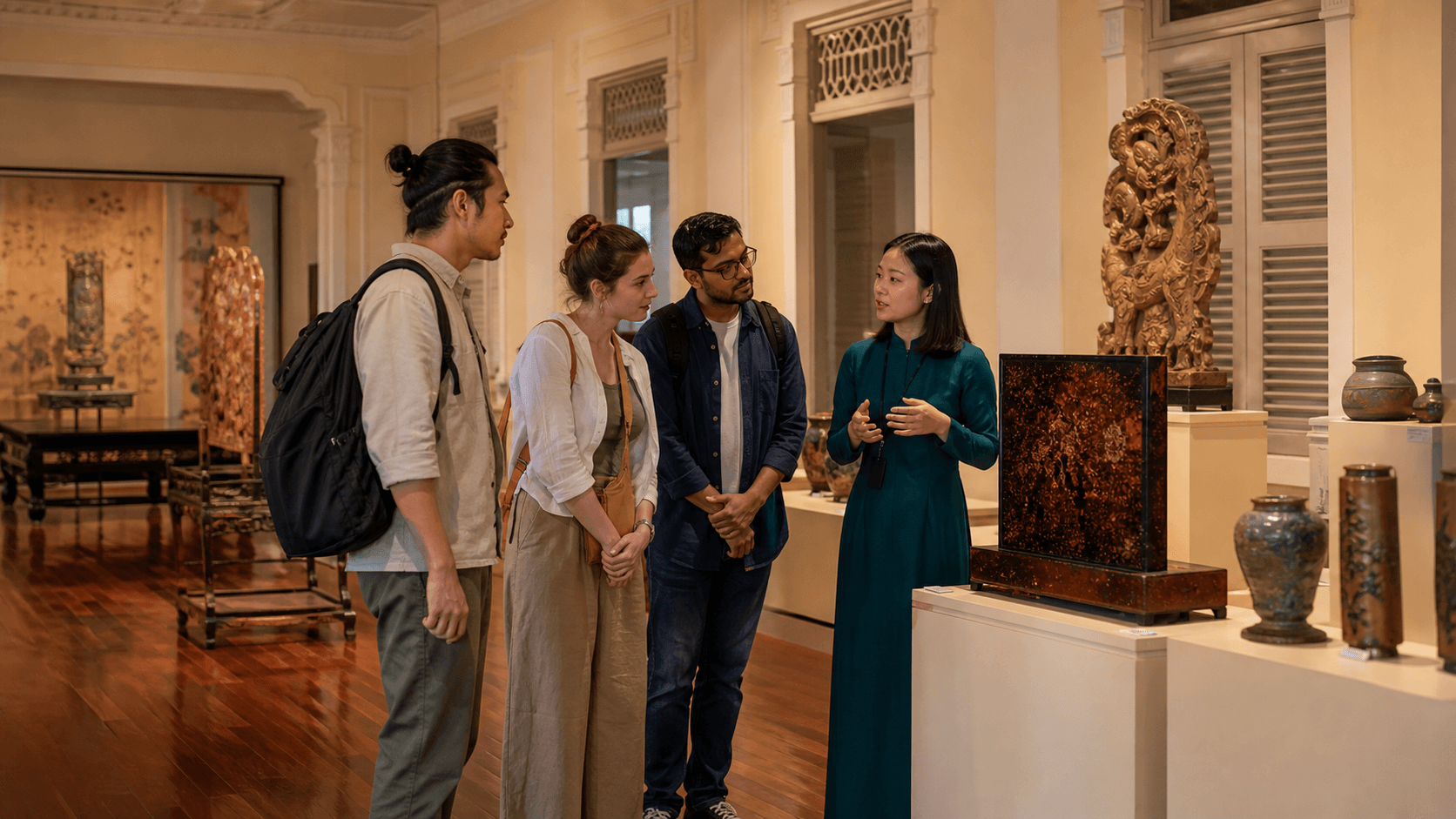
A collection should support the journey, not become another box to tick.
Vietnam Tourism’s official museum overview introduces collections across northern, central, and southern Vietnam, covering history, art, ethnology, medicine, coffee, oceanography, and war memory.
Use that list for inspiration, not as a current operating notice. Ticket prices, hours, closures, exhibitions, visitor entrances, and services can change. Verify the exact date through the museum’s official channel before building transport around it.
Interest, context, age, and emotional readiness matter more than rankings.
Useful early in a route when you want a timeline for later citadels, neighborhoods, memorials, and heritage sites.
Best for travelers interested in lacquer, sculpture, ceramics, painting, architecture, and the visual language seen elsewhere in Vietnam.
Ethnology, women’s history, community, craft, and regional collections can add context—but exhibits never replace listening to living communities.
Powerful collections may contain graphic images, personal testimony, weapons, or distressing themes. Read content guidance and decide what suits each traveler.
Coffee, medicine, oceanography, archaeology, and local industries reward a genuine interest more than a generic ‘must-see’ list.
A focused current exhibition may offer more value than rushing a large permanent collection. Confirm dates and language support directly.
A saved blog post cannot confirm today’s gallery operations.
The Vietnam National Museum of History publishes official notices and exhibition information. The Vietnam National Fine Arts Museum describes its collections, education, multimedia guide, and visitor services. Use the relevant institution’s own site for the latest details.
If language is a concern, prepare with the Vietnam communication guide and save the museum name and address in Vietnamese.
Attention is limited; spend it on what matters.
Choose one question you want the museum to answer. Save the official visitor page, entrance pin, ticket evidence, and a local-language address.
Take a map, identify facilities and exits, scan the exhibition sequence, and decide which section deserves the most energy.
Read selectively. Alternate objects, labels, and conversation; stop for a bench before concentration disappears.
Check the rule in each gallery. Turn off flash and sounds where required, keep pathways clear, and never touch, lean on, or reposition displays.
Slow down, give companions privacy, and leave a gallery when needed. Do not turn traumatic images, human remains, memorial spaces, or other visitors into casual content.
Use a quiet meal, café, walk, or independent hour to process the visit before adding another dense historic site.
Being permitted to view something does not remove the responsibility to respond respectfully.
One clear museum purpose in each region, not a collection marathon.
Choose either a broad history museum or a people-and-culture collection. Keep the afternoon for one connected neighborhood or heritage site rather than a second major museum.
On another day, use a focused fine-arts visit before the nearby cultural route. The official Vietnam National Fine Arts Museum site can confirm current exhibitions and visitor services.
Pair a collection such as Cham sculpture with a later heritage visit only after checking that the themes and day length suit the group.
Select art, city history, medicine, or war memory based on interest and sensitivity. Do not schedule two emotionally demanding collections back-to-back.
Use the Hanoi, Da Nang, and Ho Chi Minh City pages to connect each collection with the surrounding city rather than isolating it as an indoor stop.
A guide should deepen the visit without taking away your time to look.
Consider an official educator, audio guide, museum app, or relevant local guide when labels are limited in your language, the collection needs historical context, or the group has focused questions. Confirm the guide’s scope and whether independent viewing time is included.
Self-guided visits suit travelers who prefer quiet observation, have strong background knowledge, or want to follow personal interests. The Vietnam local-guide decision guide provides a broader framework.
The museum should explain the journey, not interrupt it.
VietnamTour.in can match museum themes to a customized itinerary, arrange private transport or an appropriate guide, and sequence collections with related neighborhoods, food, architecture, or heritage sites. It can also keep emotionally dense visits apart and protect independent viewing time.
Share interests, children’s ages, language, accessibility requirements, content sensitivities, and preferred level of interpretation through the trip-planning form. Use the itinerary-pacing guide to decide where cultural depth fits best.
Choose by the question you want answered, not by a universal ranking. A national-history or ethnology collection can establish context; art, regional culture, medicine, coffee, oceanography, or war memory may better suit a specific itinerary.
Collection size, language support, family needs, accessibility, and interest vary. A focused visit with one priority section is often more valuable than trying to read every label. Confirm final entry and closure times directly.
Rules vary by museum, exhibition, object, and intended use. Check official information and gallery signs, ask staff when uncertain, and never assume that phone photography, flash, tripods, or commercial use are permitted.
Adults should review current exhibit descriptions and content warnings first. Graphic material and testimony may not suit every child or adult. Offer a real choice to skip sections or leave, and avoid promising that every display is age-appropriate.
Not always. A museum educator, qualified guide, audio guide, or official app can help where translation or historical context is limited. Independent visits work well when interpretation is clear and you prefer personal pace.
VietnamTour.in can select museum themes that support a customized route, coordinate private transport or an appropriate guide, and avoid placing dense visits too close together. Current museum rules and exact services still require reconfirmation.
Choose a relevant collection, verify the current rules, look slowly, respond respectfully, and use what you learn to see the rest of Vietnam with more context.
Plan a Culture-Rich Private Vietnam Trip