Northern Vietnam
Hanoi, Ha Long Bay, Ninh Binh, and Sapa
Northern conditions can change noticeably by place and elevation. A breathable base layer, a light warm layer, and a compact rain shell give you more flexibility than one heavy outfit.
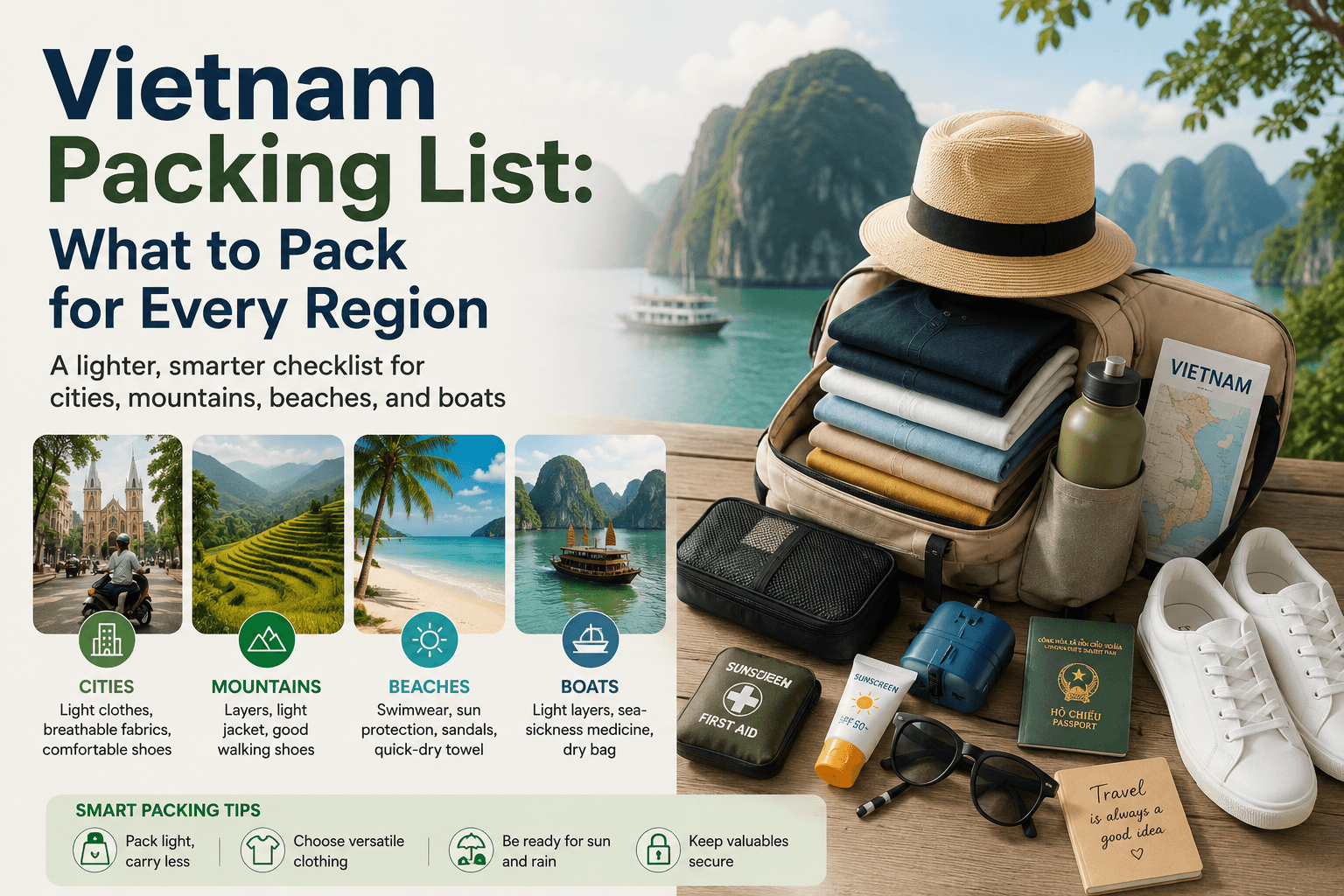
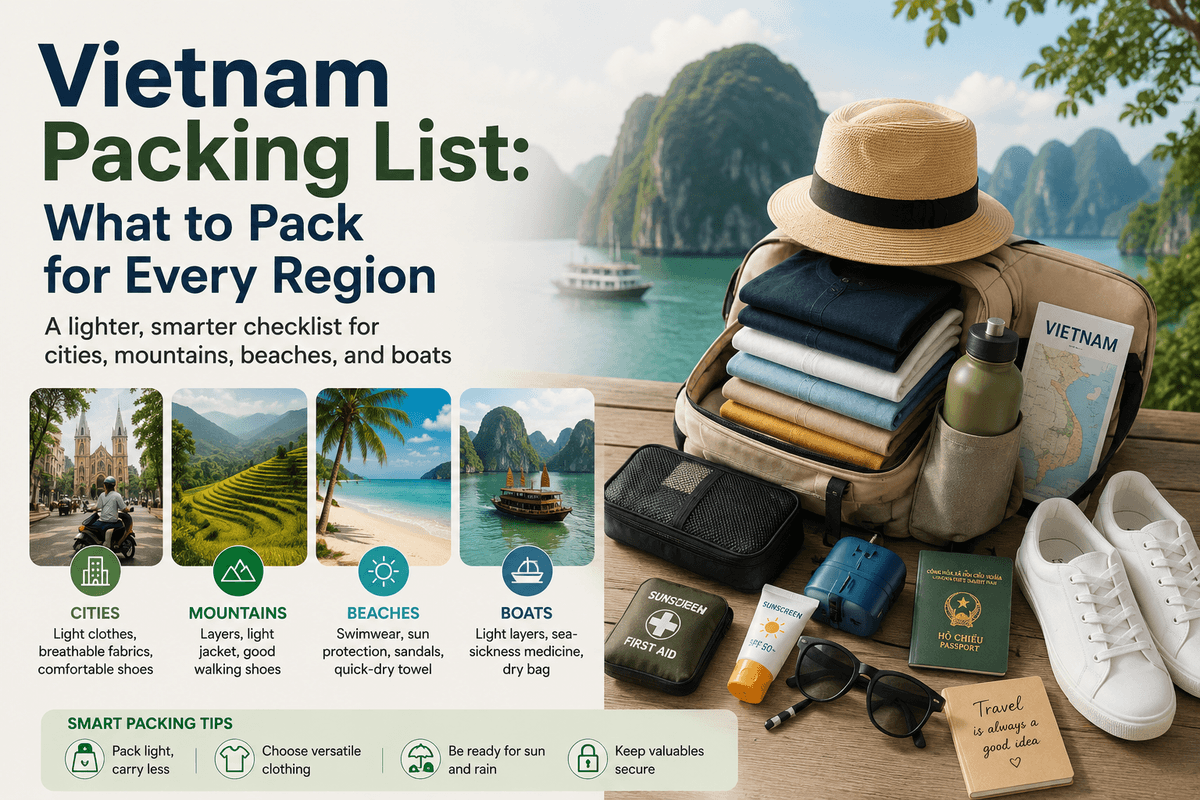
A lighter, smarter checklist for cities, mountains, beaches, and boats
Vietnam is easier to pack for when you prepare for activities and layers instead of trying to predict every day. This practical list covers the essentials while leaving enough room for a comfortable, flexible trip.

A multi-city Vietnam holiday can combine different elevations, activities, and indoor temperatures in one journey.
Start with the places you will visit and what you plan to do there. A city-and-beach holiday needs different footwear from a Sapa trek, while a route with temples and family visits needs more modest clothing than a resort-only stay.
The most reliable system is breathable clothing plus layers: a comfortable base, one light warm layer, and a compact outer layer for rain or wind. Check the forecast for each stop shortly before departure, then adjust quantities without rebuilding the entire bag.

Use these regional notes as a starting point, then refine them for your dates and planned activities.
Northern Vietnam
Northern conditions can change noticeably by place and elevation. A breathable base layer, a light warm layer, and a compact rain shell give you more flexibility than one heavy outfit.
Central Vietnam
Central Vietnam rewards lightweight clothing, sun protection, and a simple rain plan. Choose items that dry quickly so a shower or beach day does not leave damp clothes in your luggage.
Southern Vietnam
Warm, humid days call for loose, breathable fabrics and reliable sun protection. Keep one light overshirt for strong indoor air conditioning and modest coverage when needed.
Versatile pieces reduce weight and make daily decisions easier.
Choose breathable tops and bottoms that work together. Add one modest outfit covering shoulders and knees for temples, formal spaces, or a more polished evening.
A comfortable walking shoe and a sandal or easy slip-on cover most itineraries. Break footwear in before departure and pack blister care for longer walking days.
Carry a compact rain layer, reusable water bottle, sunglasses, hat, and sunscreen. A small dry bag or zip pouch protects a phone and documents during boat trips or showers.
Packing for a week and arranging laundry during a longer holiday usually keeps luggage manageable. Separate clean, damp, and worn items with lightweight packing cubes or bags.
Keep the items that can disrupt a trip in your cabin bag and easy to reach.
Keep your passport, entry documents, insurance details, tickets, hotel addresses, and emergency contacts together. Save secure digital copies separately.
Carry regular medicines in original packaging, plus the prescription or supporting note you may need. Add a compact personal kit for minor cuts, blisters, and stomach upsets.
Pack phone cables, power bank, headphones, and a suitable travel adapter. Check airline rules for batteries and keep power banks in cabin baggage where required.
Include one change of clothes, basic toiletries, valuables, and anything essential for the first day in case checked luggage is delayed.
These lightweight additions solve common problems without filling your suitcase.
A light scarf or overshirt makes modest coverage easy, but follow posted rules because a scarf may not replace appropriate clothing at every site.
Download maps, bookings, translation tools, and key addresses. A printed hotel address can help when a phone battery or mobile connection fails.
Use a compact day bag for water, a rain layer, sun protection, and daily essentials while leaving larger luggage at the hotel.
A useful packing list also protects you from unnecessary weight.
Avoid too many single-purpose outfits, duplicate toiletries, uncomfortable new shoes, and bulky items available through your accommodation. Confirm hotel amenities before packing, and remember that you can arrange laundry during a longer trip.
Do not pack restricted items without checking current airline, transit-country, and destination rules. Battery, liquid, medicine, food, and sharp-item requirements can differ by route, so verify them with the relevant official sources before flying.
Build the bag around your actual route with our 5–10 day Vietnam itinerary, then review the Vietnam cultural etiquette guide for temple and local-visit clothing advice.
Before departure, use the Vietnam eSIM and SIM card guide to prepare offline maps and a reliable arrival-day connection.
The best Vietnam packing list is adaptable: breathable basics, sensible footwear, one warm layer, rain and sun protection, and a carefully organized cabin bag. Check each destination shortly before travel and let your activities decide the final details.
Maya Travels can help shape a Vietnam route around your preferred pace, comfort level, and experiences so you know what the journey actually requires.
Plan Your Vietnam TripPut this advice into context with Vietnam tour packages from India and Vietnam travel guide for Indian travellers. These resources help connect the article's practical guidance with the right route, travel style, and planning requirements.