2026 · Practical Travel

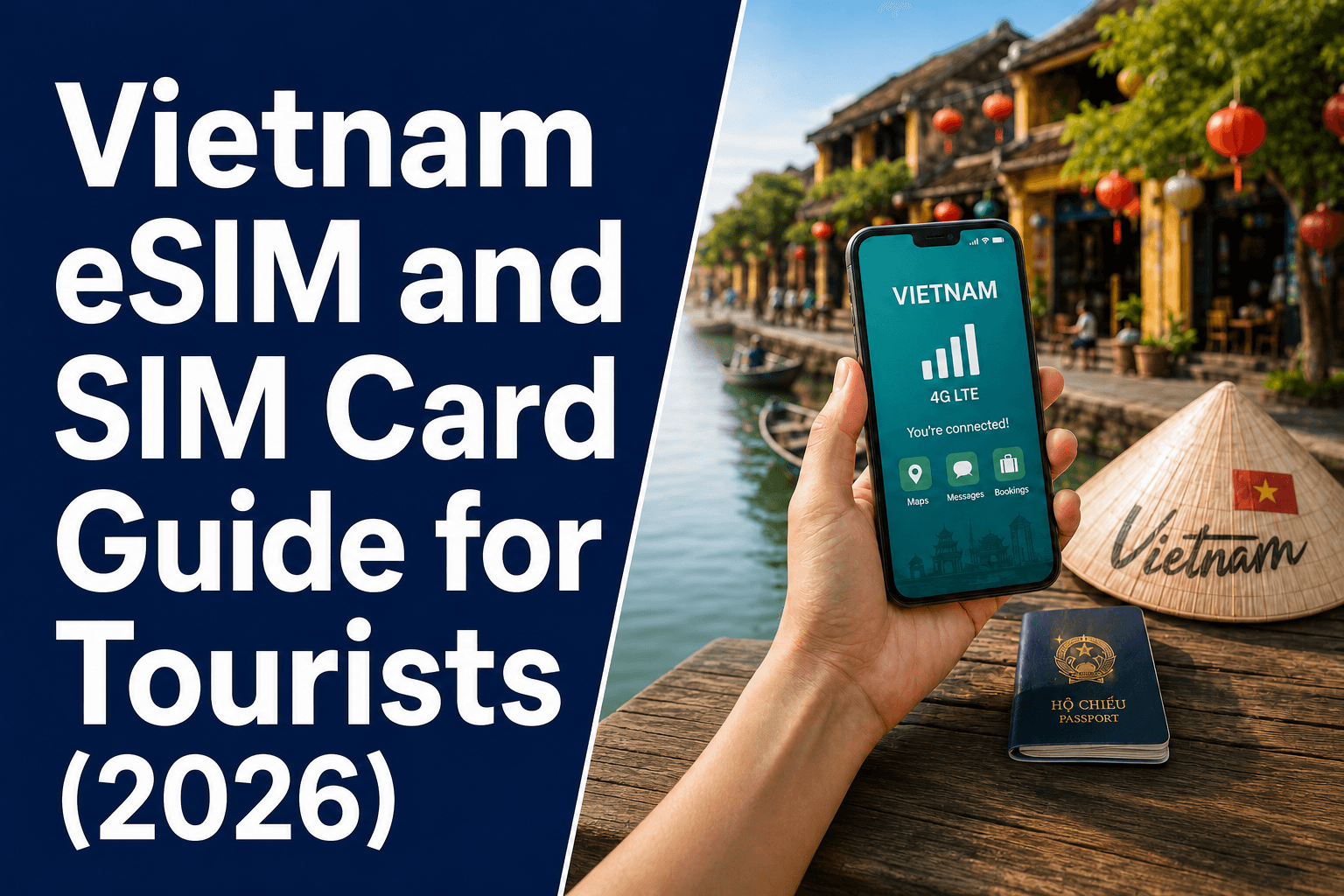
Vietnam eSIM and SIM Card Guide for Tourists

Stay connected for maps, messages, bookings, and everyday travel

Reliable mobile data makes a Vietnam trip easier, but the best option depends on your phone, trip length, and need to keep your home number active. This guide helps you choose and set up the right connection without paying for features you will not use.

Ho Chi Minh City skyline representing mobile connectivity in Vietnam
eSIMFastest SetupInstall before departure and switch on data after arrival
Local SIMFlexible ChoiceUseful when your phone needs a physical card
Offline MapsBest BackupKeep essential directions available without a signal
By Maya Travels Team · Published July 11, 2026 · 10 min read

Start With the Way You Actually Travel

There is no single best connection for every visitor. The right choice is the one that fits your device and daily routine.

Most visitors use mobile data for navigation, translation, messaging, restaurant searches, digital tickets, and ride booking. Those tasks do not automatically require the largest available package. Begin with your trip length, expected usage, and whether you need a local phone number.

An eSIM is usually the smoothest arrival-day option for a compatible phone. A local physical SIM can be better for a longer stay or a device without eSIM support. Roaming remains a useful fallback when access to your home number matters more than price.

Traveler planning a connected Vietnam journey

eSIM vs SIM Card vs Roaming

Compare convenience, setup, and tradeoffs before choosing a plan.

Digital

Travel eSIM

An eSIM is convenient when your phone supports it and is carrier-unlocked. You can install the profile before flying, keep your primary SIM in place, and activate the travel data line when you reach Vietnam.

Best forShort trips and travelers who want data on arrival
Check before buyingDevice compatibility, activation window, and hotspot rules
Main tradeoffMany travel eSIMs provide data but no local voice number

Physical

Local prepaid SIM

A physical prepaid SIM is a practical choice for longer stays or phones without eSIM support. Buy from a reputable, clearly identified seller and confirm that the SIM is properly registered and working before leaving the counter.

Best forLonger holidays and physical-SIM devices
Check before buyingPlan validity, included data, and whether calls are included
Main tradeoffYou may need to remove or temporarily disable your home SIM

Home Network

International roaming

Roaming keeps your usual number active and requires the least setup. It can be valuable for receiving bank messages or important calls, but you should review your carrier's terms before travel to avoid accidental data charges.

Best forVery short visits or essential access to your home number
Check before buyingDaily limits, fair-use terms, and background data settings
Main tradeoffConvenience can cost more than a dedicated travel data plan

A Safe Setup Checklist Before You Fly

Ten minutes of preparation can prevent most arrival-day connection problems.

📱

Confirm that your phone is unlocked

A locked handset may reject another carrier's SIM or eSIM. Check with your home carrier before departure, when there is still time to resolve the issue.

⚙️

Install first, activate at the right time

Follow the plan's instructions carefully. Some plans begin when installed, while others begin when they first connect to a supported network in Vietnam.

🔒

Protect your primary number

Label each line in your phone settings. Turn off data roaming on your home line, then select the Vietnam line as the mobile-data source.

🗺️

Download the essentials offline

Save maps, hotel details, tickets, translation packs, and emergency contacts before travel so one weak-signal moment does not disrupt the day.

How Much Mobile Data Do You Need?

Think about activities rather than chasing an impressive data number.

Light use

Messaging, maps, ride booking, email, and occasional browsing need far less data than video.

Regular use

Daily social uploads, navigation, calls, and research benefit from a comfortable data allowance.

Heavy use

Hotspot work, cloud backups, and streaming can consume data quickly; check plan limits and Wi-Fi availability.

Using Public Wi-Fi More Carefully

Hotel and cafe Wi-Fi can save data, but it should not be your only connection plan.

Confirm the network name with staff before connecting. Avoid sending sensitive information over an unfamiliar open network, keep your phone updated, and use your own mobile data for banking or other private tasks when possible.

If your signal disappears, toggle airplane mode, confirm that the correct line is selected for mobile data, and check whether data roaming must be enabled for the travel line. Keep the eSIM QR code or provider instructions somewhere you can access offline, and do not delete an eSIM profile while troubleshooting unless the provider specifically tells you to do so.

Connectivity is only one part of a smooth route. Use our practical 5–10 day Vietnam itinerary guide to reduce unnecessary transfers, and read the Vietnam cultural etiquette guide before visiting homes, temples, and local neighborhoods.

Also store your accommodation address, insurance details, and key contacts outside your messaging apps. A screenshot or printed copy is simple, private, and useful when a battery or network fails.

Connect Before You Complicate the Trip

Choose an eSIM for speed, a local SIM for physical-card flexibility, or roaming for effortless access to your usual number. Whichever option you pick, test the setup, protect your home line from accidental charges, and keep essential travel information offline.

Need help building the route around your flights, hotels, and travel style? Maya Travels can create a practical Vietnam holiday plan with the right pace and local support.

Plan Your Vietnam Trip
Free Ebook