
Ninh Binh rowing route
Low seating, fixed time on the water, cave clearances, sun or rain exposure, and transfers between boat and land all shape suitability.
Choose the vessel, boarding, and support—not only the scenery
A short sampan or river trip deserves the same careful questions as any water activity: fit, capacity, flotation, weather, mobility, communication, and a workable alternative.
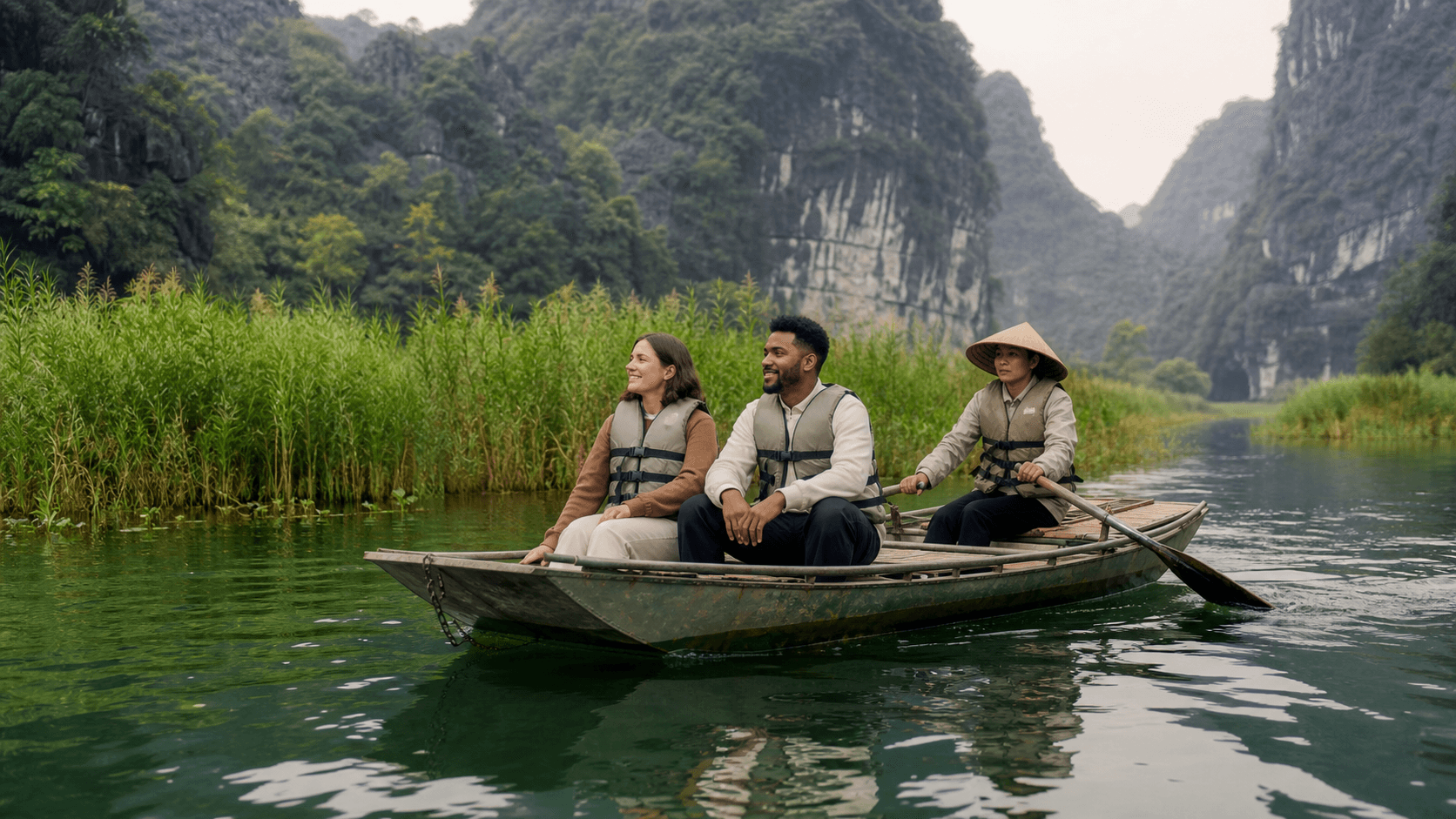
Calm water and a short route do not remove the need to plan.
Vietnam Tourism’s official Ninh Binh guide presents paddleboat journeys through limestone waterways, while its Mekong Delta guide describes river and sampan experiences.
Those pages explain why the journeys are appealing. Your booking decision still needs the assigned vessel, current route, operating conditions, boarding arrangement, equipment, and support details.
“Boat tour” is not a useful description by itself.
Low seating, fixed time on the water, cave clearances, sun or rain exposure, and transfers between boat and land all shape suitability.
Narrow waterways can involve several vehicle, motorboat, and small-boat changes. Confirm every boarding point and which sections are optional.
Speed, wake, spray, engine noise, boarding height, shade, capacity, and distance from shore differ from a hand-rowed ride.
Working waterways are not staged attractions. Ask how the visit respects homes, livelihoods, wildlife, and photography boundaries.
Reduced visibility, return transport, insects, changing weather, alcohol, and unfamiliar docks need more planning than a daylight trip.
Private does not mean unrestricted. Capacity, route, operating rules, weather decisions, and shared docks still apply.
The written description should cover the journey and what happens when it cannot proceed.
Review the Vietnam travel-insurance guide for activity definitions, exclusions, medical support, and claim documentation. Never assume a general sightseeing policy covers every powered or non-powered boat activity.
Small movements matter more in a small vessel.
Keep both hands available, secure loose straps, and wait for the operator to stabilize and invite boarding. Do not step in while others are moving seats.
Use the provided life jacket as instructed, fully fastened and appropriate to size. Ask for a replacement if it is damaged or does not fit.
Use designated steps and handholds. Keep weight low and centered; follow the operator’s seating order rather than choosing the best camera angle.
Place bags where instructed, keep aisles and feet clear, identify shade and emergency equipment, and confirm the return or regrouping point.
Do not swap places, lean over, stand for photographs, trail hands or feet, or reach for vegetation unless the operator explicitly says it is safe.
Wait for the boat to be secured, then leave one person at a time. Retrieve bags only after you are stable on shore.
The CDC’s water-activity guidance recommends following local instructors and officials and wearing a life jacket on boats. Current local and operator instructions take priority for the specific trip.
A prepaid ticket does not make a route suitable.
The boat section sits inside a flexible day, not at the edge of a flight.
Two adults choose a Ninh Binh rowing route after comparing time on water, cave sections, seating, boarding assistance, life-jacket availability, weather policy, and land-based alternatives.
The private driver and operator reconfirm the dock, pickup, current conditions, route status, ticket method, and what to bring. The travelers keep valuables minimal.
Each traveler inspects and fastens a correctly fitting life jacket, watches the boarding surface, follows the operator’s seating order, and asks where the next toilet and shelter are.
The travelers remain seated, keep the boat balanced, follow cave-clearance instructions, and put photography away during tight or busy sections.
The itinerary allows a meal and flexible heritage visit. No immediate airport transfer or fixed distant activity depends on an exact return minute.
Use the Ninh Binh destination guide to create a worthwhile land-based alternative around heritage, scenery, and a relaxed meal.
Ask about the full route from vehicle seat to boat seat and back.
The accessible Vietnam guide offers a wider route-assessment framework.
Private planning can align the dock, vessel, road transfer, and backup activity.
VietnamTour.in can compare suitable boat experiences, coordinate private transfers, ask operators about boarding and life jackets, protect enough time around the route, and keep a land alternative available. The operator and authorities retain every safety, capacity, weather, and cancellation decision.
Share ages, heights, swimming confidence, mobility and balance needs, child-equipment requirements, preferred duration, weather flexibility, and photography gear through the trip-planning form.
CDC travel guidance recommends wearing a life jacket on boats and during water recreation. Use a properly fitting jacket, fully fastened, and follow current local and operator instructions. Do not treat a cushion or inflatable toy as equivalent safety equipment.
Suitability depends on the exact dock, steps, transfer gap, assistance, boat stability, low seating, back support, cave clearance, toilet timing, and evacuation options. Request photos and measurements and describe needs before booking.
Do not assume so. Ask for age or size rules, child life-jacket fit, seating, shade, supervision, duration, toilet access, and emergency procedure for the exact operator and route. An adult must supervise actively throughout.
Follow official and operator safety decisions. Ask in advance who cancels or reroutes, how you are contacted, what the refund or rebooking terms are, and which land activity can replace the boat section.
Carry only what you can secure in a water-resistant pouch attached to you or stored as directed. Use a wrist or neck strap where suitable, remain seated, and accept that a photograph is never worth destabilizing the boat.
VietnamTour.in can compare boat styles, coordinate private transfers, ask about boarding and equipment, and keep a weather-ready alternative inside a customized itinerary. Operators and authorities retain all safety and operating decisions.
Verify the assigned vessel, wear suitable flotation, board one at a time, remain balanced, respect weather decisions, and keep a land plan that is worth choosing.
Plan a Private Vietnam River Experience