Vietnam Responsible Nature Travel

Ethical Wildlife Tourism in Vietnam: A Responsible Traveler’s Guide

Let wildlife remain wild

A meaningful encounter does not require touching, feeding, chasing, baiting, or a guaranteed sighting. Learn how to compare providers, question sanctuary claims, protect habitat, and plan a patient nature itinerary.

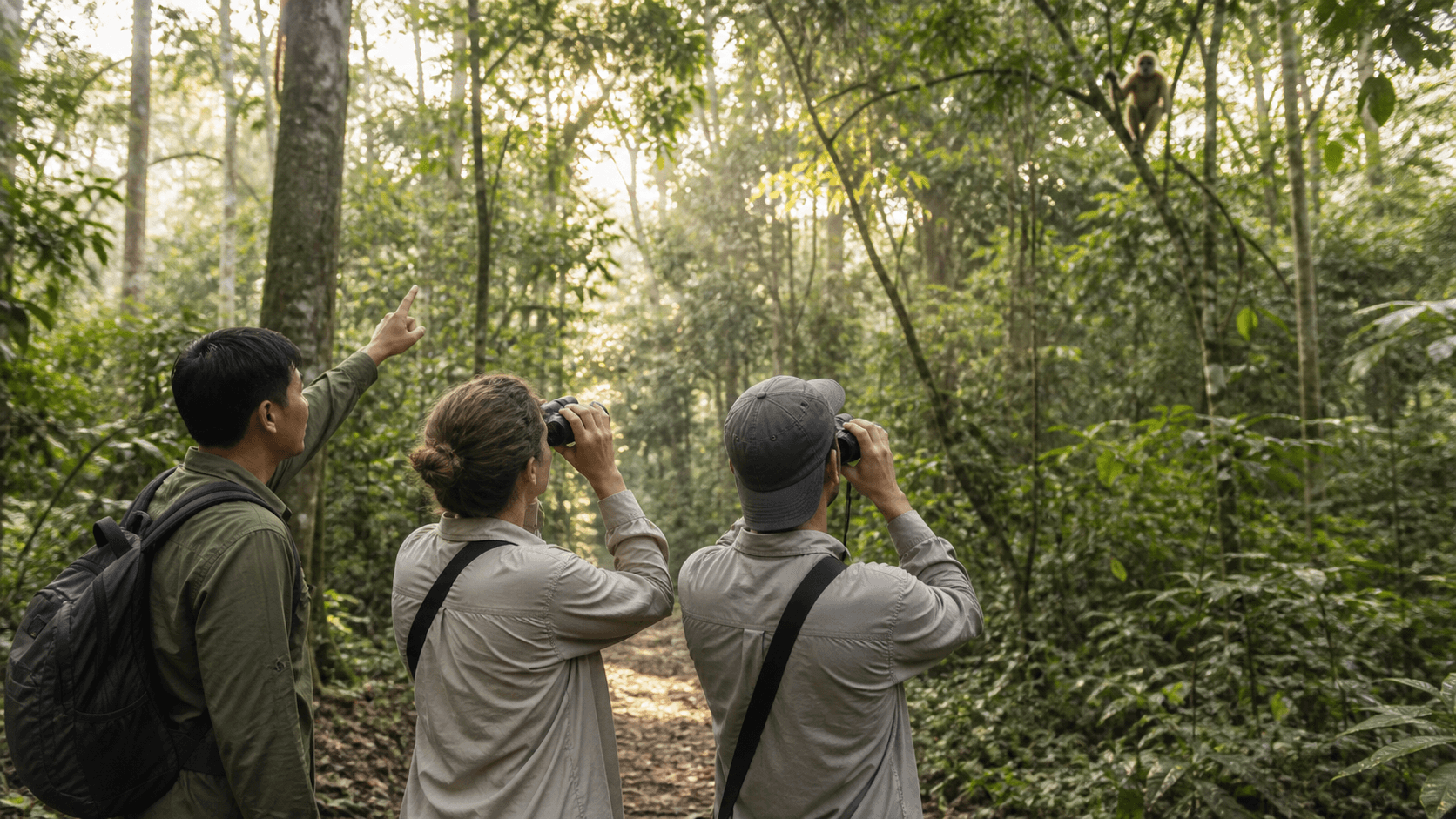
Vietnamese nature guide and international travelers observing a distant gibbon in tropical forest
ObserveDo Not ControlWild animals choose whether an encounter happens
No ContactKeep DistanceDo not feed, touch, bait, chase, or pose with wildlife
VerifyBefore BookingCheck practices, credentials, claims, and current park rules
By Maya Travels Team · Published August 8, 2026 · 12 min read

Start With the Animal’s Choice

A wild encounter is ethical only when the animal can avoid it.

Vietnam Tourism presents national parks and guided nature trips as opportunities to learn about habitat and wildlife. Its national parks guide is useful inspiration, but access and operating rules should be checked directly.

Good wildlife tourism accepts uncertainty. If an operator must lure, handle, restrain, chase, or make an animal perform to deliver the advertised moment, the experience is built around control rather than observation.

Vietnamese nature guide and international travelers observing a distant gibbon in tropical forest
Simple test: would the experience still have value if no animal appeared? Habitat, expert interpretation, tracking signs, and patient observation should make the answer yes.

Separate Observation, Care, and Entertainment

Similar marketing words can describe very different animal experiences.

Wild observation

Better sign: Animals remain free-ranging while visitors stay on trails or approved routes with a guide where required.

Caution: No sighting is guaranteed. Pressure to approach, call, spotlight, bait, or leave the route is a warning sign.

National park or reserve visit

Better sign: Habitat, ecological context, and conservation rules are central to the experience.

Caution: Park status alone does not validate every independent operator. Confirm permits, group size, route, and current rules.

Rescue or rehabilitation centre

Better sign: Education, treatment, rehabilitation, or carefully managed lifetime care may be visible without forcing interaction.

Caution: The words rescue and sanctuary are not proof. Ask about animal acquisition, breeding, performances, contact, release goals, and governance.

Animal entertainment

Better sign: A truly observation-led activity does not require an animal to perform for visitors.

Caution: Riding, tricks, staged selfies, restraint, costumes, forced bathing, and repeated handling prioritize access over natural behavior.

Marine wildlife encounter

Better sign: Operators follow current distance, speed, group-size, and no-contact rules while avoiding pursuit.

Caution: Do not accept touching, feeding, crowding, chasing, anchoring on sensitive habitat, or guaranteed close encounters.

Wildlife photography tour

Better sign: The guide values distance, patience, habitat, quiet behavior, and animal welfare over the image.

Caution: Baiting, nest disturbance, playback calls, flash, blocking movement, or revealing sensitive locations can cause harm.

Ask Six Questions Before Booking

Specific practices matter more than labels such as eco, rescue, or sanctuary.

No guaranteed animal performance

The itinerary explains habitat and likelihood, not a promised close-up, touch, pose, or trick.

Clear distance and conduct rules

Visitors receive instructions about trails, noise, flash, food, drones, waste, clothing, and what happens when an animal approaches.

Qualified local guidance

The provider identifies the guide’s natural-history role, park authorization where needed, group limit, route, and emergency process.

Specific conservation explanation

Claims name the project, action, partner, or fee mechanism instead of using conservation as an undefined slogan.

Animal histories are transparent

A captive-care facility explains where animals came from, why they cannot be released, whether breeding occurs, and how visitor access is limited.

Welfare overrides the itinerary

The guide can end or change an encounter because of weather, animal behavior, habitat conditions, safety, or park instructions.

Vietnam Tourism’s green tours overview describes guided wildlife and forest experiences. Use it as a starting point, then verify the current operator and park arrangements yourself.

Follow a No-Contact Field Routine

Your behavior is part of the encounter.

  • Stay on approved routes and follow the guide or ranger immediately.
  • Keep distance; never feed, touch, chase, corner, bait, call, or block an animal.
  • Use quiet voices, muted devices, and no flash when rules prohibit or welfare may be affected.
  • Keep food and waste secured; do not leave biodegradable waste in habitat.
  • Do not share live locations of nests, dens, roosts, or sensitive species.
  • Leave when an animal changes direction, gives warning behavior, protects young, or appears stressed.

Vietnam Tourism’s health and safety guidance also advises avoiding contact with animals because bites and disease exposure require medical attention.

Worked Example: Three Days Around Cát Tiên

Build the route around habitat and patience—not a sighting checklist.

Clearly labelled assumptions: two adults; moderate hiking ability; private road transfers; one qualified local guide; no guaranteed species; no current severe-weather warning; exact park access, permit, accommodation, price, and schedule to be reconfirmed.

Day 1 · Travel to Cát Tiên area

Private road transfer, early night, current park orientation, clothing and leech or insect preparation, no late wildlife activity after a tiring journey.

Day 2 · Guided forest observation

Small-group or private naturalist-led walk at the approved time; remain on route; no call playback, feeding, touching, or sighting guarantee.

Midday · Low-impact pause

Rest during heat, review species notes without broadcasting sensitive locations, refill water, and avoid stacking another demanding trek.

Day 3 · Flexible departure

Keep the morning optional and protect the onward transfer. If weather or park guidance changes, treat a cancelled activity as a conservation and safety decision.

Use the rainy-season guide to build weather alternatives and the regional packing guide to prepare clothing and a protected day bag.

Do Not Turn Wildlife Into a Souvenir

A product’s availability does not prove that export or import is legal.

Do not buy animal parts, medicines, foods, jewelry, curios, clothing, or decorations when species, origin, permits, or destination-country rules are unclear. CITES notes that travelers are responsible for complying with wildlife-trade requirements across borders. Check the relevant national CITES authorities before purchasing or carrying a wildlife-derived item.

The Vietnam souvenir guide provides a broader origin, packing, and declaration checklist.

How VietnamTour.in Can Plan Nature Travel Responsibly

Private planning can protect pace, route logic, and clear no-contact expectations.

VietnamTour.in can build a customized route around suitable parks, realistic transfers, qualified local guidance, traveler fitness, weather alternatives, and observation-focused expectations. The team can ask providers to state group size, route, guide role, animal-contact policy, and cancellation conditions before confirmation.

Share your dates, nature interests, mobility, fitness, photography goals, and firm animal-welfare boundaries through the trip-planning form. Current park rules and operator practices should always be reconfirmed.

Frequently Asked Questions

Where can I see wildlife responsibly in Vietnam?

National parks and protected landscapes such as Cát Tiên, Cúc Phương, and other region-specific reserves can offer guided nature observation. Current access, seasons, rules, and sightings vary, so verify directly with park authorities and qualified operators.

Is a wildlife sanctuary automatically ethical?

No. Sanctuary and rescue are not regulated proof of good practice everywhere. Ask how animals were acquired, whether breeding or performances occur, why animals are captive, whether release is attempted, how contact is controlled, and where money goes.

Should I feed monkeys or other wild animals?

No. Feeding changes behavior, can create dependence or aggression, spreads disease risk, and brings animals closer to roads and people. Keep food secured and follow site instructions.

Are elephant rides or animal selfies responsible?

Experiences built around riding, tricks, restraints, staged close contact, or repeated handling prioritize visitor access over natural behavior. Choose distant observation and credible welfare-focused education instead.

Can I buy wildlife products as souvenirs?

Do not buy items made from wildlife when species, legality, origin, or import rules are unclear. Domestic sale does not guarantee legal export or entry into your home country. Verify current rules with relevant authorities.

How can VietnamTour.in help plan a wildlife-focused trip?

VietnamTour.in can build a private route around suitable national parks, qualified local guidance, realistic transfers, traveler pace, and no-contact expectations. Current park rules, permits, operating conditions, and provider practices must still be reconfirmed.

The Best Encounter Leaves the Animal Undisturbed

Choose patient observation, verify claims, keep your distance, follow park instructions, reject performances and contact, and let habitat—not a selfie—be the reason to visit.

Plan a Responsible Private Nature Journey
Free Ebook