Shopping Guide

Vietnam Souvenir Guide: Shopping, Bargaining and Packing

Choose meaningful crafts, agree on the purchase clearly, and bring everything home safely

Vietnam offers lively markets, specialist streets, craft villages, workshops, boutiques, and tailors. The best souvenir is not simply the cheapest object: it is something you understand, genuinely want, can transport legally, and will still value after the trip.

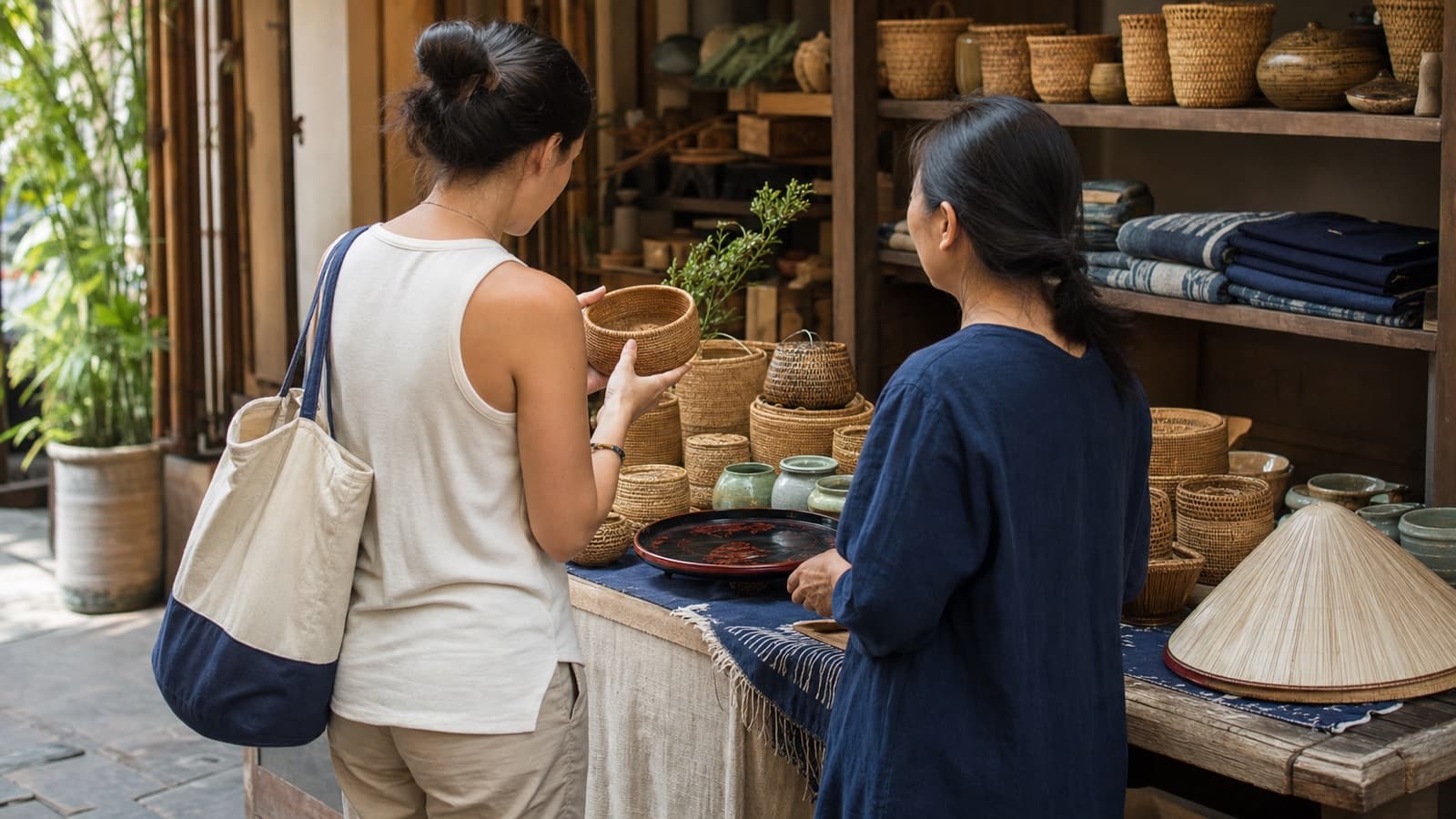
Traveler examining a woven basket at a Vietnamese artisan market
ChooseWith PurposeMatch the souvenir to its maker, material, use, and story
AgreeBefore PayingConfirm the item, quantity, total, currency, and collection
PackFor the JourneyCheck breakage, liquids, food, baggage, and import rules
By Maya Travels Team · Published July 30, 2026 · 11 min read

Start With a Souvenir Plan, Not an Empty Suitcase

A short wish list, spending limit, and baggage allowance make shopping more enjoyable and reduce last-day mistakes.

Decide who you are buying for and what kind of memory you want to carry home. A useful kitchen item, a small piece of art, a locally made textile, or a photograph from a workshop visit may be more meaningful than a bag of rushed gifts. Leave some room for discovery, but set a total shopping budget and reserve luggage space before the first market.

Vietnam's craft traditions include weaving, ceramics, lacquerware, paper, embroidery, woodwork, metalwork, tailoring, and many regional foods. Similar-looking items can differ in origin, material, labour, finish, and durability. Ask questions about the exact piece and buy the answer you understand rather than the story you hope is true.

Use the Vietnam money guide to prepare cash, cards, and payment security. The cultural etiquette guide also helps with greetings, body language, photographs, and respectful interactions in busy local settings.

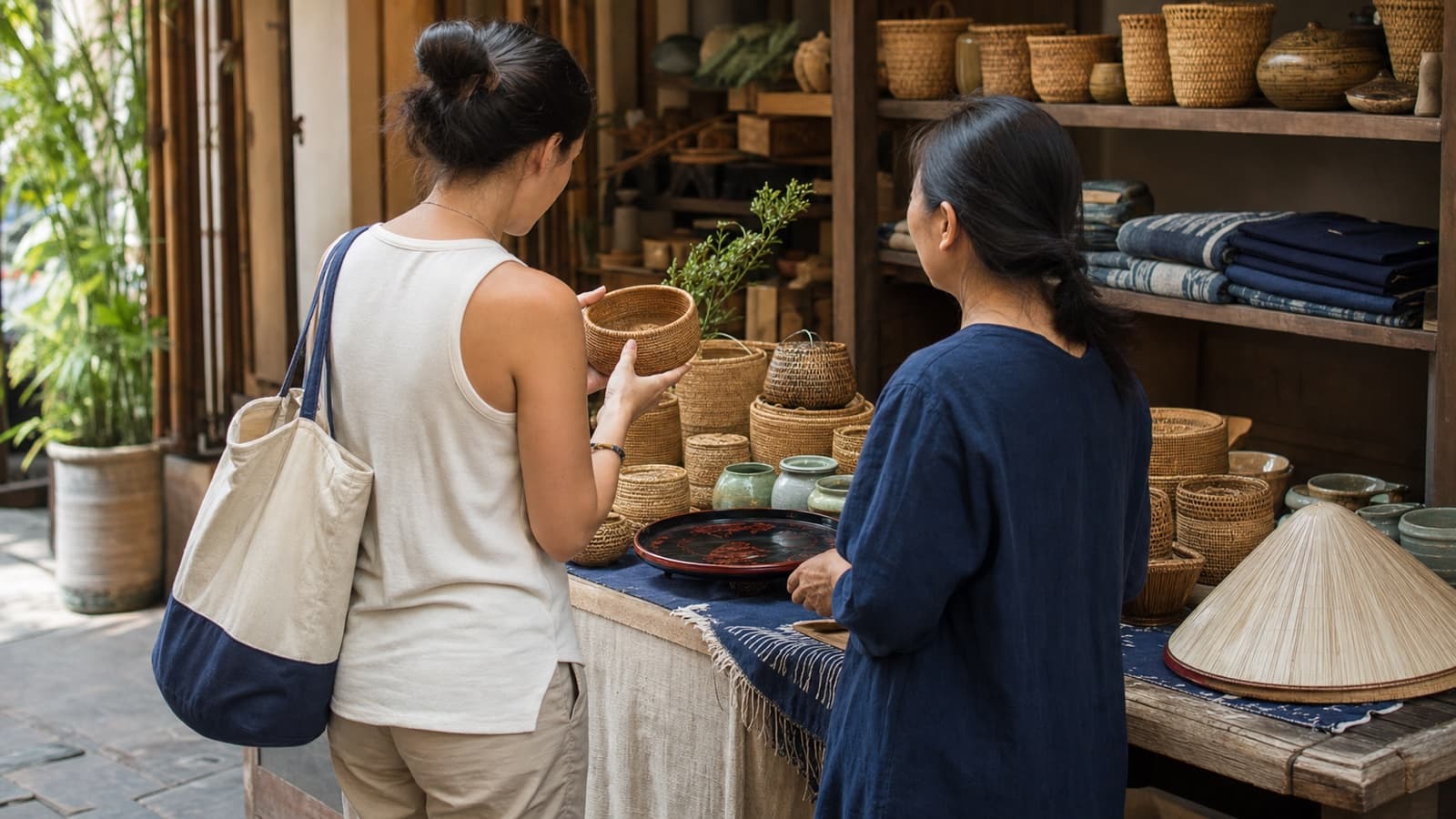
Artisan stall displaying woven baskets, ceramics, textiles, and a conical hat

Choose the Right Place for the Kind of Purchase

Markets, workshops, boutiques, and tailors offer different levels of comparison, explanation, customisation, and after-sales help.

Markets

Browse widely before choosing

Traditional and tourist markets are useful for comparing styles, materials, and asking prices. Quality can vary between stalls, so inspect the exact item rather than treating every similar-looking piece as identical.

Best forSmall gifts, textiles, household items, snacks, and discovering what is available

Artisan Shops

Ask about the people and process

A workshop, craft village, cooperative, or specialist shop may be better when the maker, technique, and origin matter. Ask specific questions and look for clear care information rather than relying on a vague handmade label.

Best forCeramics, lacquerware, woven goods, paper, embroidery, and meaningful keepsakes

Boutiques

Pay for selection and service

Fixed-price boutiques can make provenance, packaging, receipts, card payment, and exchanges easier to discuss. A polished store is not automatic proof of quality, but the buying process may be simpler.

Best forDesign-led gifts, easier comparison, documented purchases, and careful packaging

Tailors

Treat custom work as a project

A tailored item needs a written design, fabric choice, measurements, fitting schedule, final price, and collection plan. Leave enough time for more than one fitting instead of expecting a perfect result immediately.

Best forClothing when the trip allows fittings, corrections, and an unhurried final check
Do one orientation walk without buying large items. Save locations or business cards, photograph products only with permission, and return after comparing quality, service, and packed size.

Check Quality Without Pretending to Be an Expert

Simple questions and a careful physical inspection reveal more than an impressive label.

1

Inspect the exact piece

Check edges, seams, zips, handles, glaze, joins, lining, closures, symmetry, and stability. For a set, inspect every piece because quality and colour can vary.

2

Ask what it is made from

Clarify the fibre, wood, metal, coating, dye, glaze, filling, or food ingredients. Material names affect care, durability, allergies, baggage, and import decisions.

3

Separate origin from sales language

Ask where the item was made, who made it, and whether any stage was completed elsewhere. Words such as local, traditional, natural, and handmade can mean different things to different sellers.

4

Request care instructions

Find out whether a textile may bleed colour, a basket must stay dry, a lacquer surface needs gentle cleaning, or a ceramic is decorative rather than suitable for food.

5

Check size and weight early

Measure bulky items before paying and compare them with your luggage allowance. A light conical hat can still be awkward to protect, while ceramics may use weight quickly.

6

Keep useful purchase evidence

For valuable, custom, shipped, or material-sensitive purchases, request a receipt that identifies the seller, item, amount, date, and any agreed delivery or alteration terms.

Handmade does not mean flawless, but every flaw is not charming. Decide which variation reflects the process and which issue affects function, safety, or longevity before paying.

Bargain Respectfully When Bargaining Is Welcome

The goal is a clear agreement, not a contest with the seller.

Observe

Find out whether the setting uses fixed prices

Price negotiation may be normal at some market stalls and inappropriate at a fixed-price shop, cooperative, gallery, or clearly labelled counter. Watch how the shop works and ask politely when unsure.

Compare

Learn the range before negotiating

Look at several genuinely comparable items. Material, size, workmanship, condition, and seller support can explain a price difference, so the lowest number is not always the better purchase.

Offer

Make a calm, realistic counteroffer

If bargaining is welcome, decide what the item is worth to you and make a respectful offer. Keep the exchange friendly, avoid dramatic claims, and do not pressure the seller to justify their livelihood.

Decide

Accept, decline, or walk away gracefully

A seller may say no, and you may decide not to buy. Thank them and move on without anger. If the agreed amount works for both sides, confirm the exact item and total before payment.

Do not begin bargaining unless you are genuinely interested. Once a price is agreed, changing the quantity, exact item, packaging, or payment method can change the deal, so confirm everything again.

Make the Payment as Carefully as the Choice

Slow down for the amount, currency, receipt, and delivery terms, even when the market around you is busy.

🧾

Confirm the complete total

Repeat the item, quantity, currency, alterations, packaging, delivery, and final amount. Ask whether a card fee, shipping charge, or deposit is included before authorising payment.

💵

Handle cash deliberately

Count notes and change without rushing, especially when denominations look similar. Keep the main wallet out of view and use a smaller amount for a busy market.

💳

Keep control of card payments

Check the displayed amount and currency, keep the card in sight where possible, and retain the receipt. Availability, surcharges, refunds, and network reliability vary by seller.

📱

Verify digital payment details

Use only a payment method you understand. Confirm the recipient and amount on your own screen, protect the approval step, and rely on your transaction record rather than a screenshot shown by someone else.

Photograph a valuable or custom item and its receipt before it is wrapped. If a purchase feels misleading or payment details do not match, pause in a safe place and use the response steps in the Vietnam travel safety guide.

Pack Each Souvenir for Its Weakest Point

Breakage, moisture, pressure, spills, baggage rules, and border controls all deserve attention before checkout.

Ceramics and Glass

Immobilise every fragile piece

Ask for individual wrapping, protect rims and handles, fill empty spaces, and place rigid items away from the luggage shell. Carry especially meaningful pieces only when security and airline rules allow.

VerifyFinal packed dimensions, cabin restrictions, checked-bag handling, and damage cover

Textiles and Clothing

Protect against moisture and colour transfer

Keep clean textiles dry and separate from toiletries, shoes, and strongly dyed items. Photograph custom garments after the final fitting and carry alteration notes if follow-up is promised.

VerifyFabric care, colourfastness, final measurements, buttons, zips, and seams

Food and Drink

Keep original labels and sealed packaging

Ingredients, allergens, liquids, powders, fresh produce, seeds, meat, and plant materials may face airline or destination-country restrictions. Never assume a shop purchase can cross every border.

VerifyIngredient list, expiry date, package seal, baggage rules, declaration, and import rules

Large or Shipped Items

Document the packed object and delivery

Record measurements, condition, packing method, address, carrier, tracking, insurance, customs responsibility, and the process for loss or damage. Keep the order details after returning home.

VerifyWho exports, who imports, extra charges, delivery window, and claim evidence
Airline, airport, security, customs, agriculture, and postal rules can differ by route and change over time. Check the exact carrier and every country involved before buying an item that is liquid, sharp, oversized, edible, organic, valuable, or culturally significant. The Vietnam packing list helps reserve space, while the domestic flights guide explains why the operating carrier's current baggage terms control.

Shop Responsibly and Avoid Restricted Materials

A purchase should respect the maker, the market, cultural heritage, wildlife, and the rules at home.

🌿

Avoid wildlife and uncertain natural materials

Do not buy coral, shells, ivory-like carvings, reptile products, feathers, medicines, timber, or other animal and plant products when the species and legal paperwork are unclear. CITES and national rules can apply even to a small souvenir.

🏺

Be cautious with objects presented as antique

Age, cultural significance, ownership history, and export eligibility require specialist verification. A seller's story is not a substitute for provenance or the permissions required by the countries involved.

🤝

Support work you can understand

Ask who made the item and how the purchase supports them. Workshops and recognised craft sellers can make the connection clearer, but evaluate each claim instead of assuming every community label is verified.

📷

Respect people and working spaces

Ask before photographing sellers, artisans, children, religious objects, or production areas. A market is a workplace as well as a visitor experience, so keep entrances, counters, and narrow aisles clear.

If the material or history is uncertain, choose something clearly contemporary and made from a familiar, documented material. A responsible alternative is better than risking confiscation, wildlife harm, or the removal of cultural property.

Organise the Last Shopping Day Around Departure

Leave time to collect custom work, inspect it in daylight, pack again, and solve problems without risking the airport transfer.

Schedule the final fitting or collection well before checkout. Confirm every custom item against the written order, try on clothing with the shoes or layers you plan to wear, and inspect fragile goods before they disappear inside protective wrapping. Do not accept a promise of later hotel delivery without a clear contact, deadline, and fallback.

Return to your room to distribute weight, protect corners, and keep receipts accessible. If your accommodation will hold bags, confirm the collection time and keep passports, medicines, valuables, and essential travel documents with you. The luggage storage guide covers handover evidence and collection buffers.

For packaged foods, read the ingredient label rather than relying on appearance or a general description. Travelers with allergies or medical dietary needs should follow the individual plan in the food allergy guide and verify cross-contact as well as ingredients before buying.

Traveler checking a woven souvenir before purchase in Vietnam

Bring Home a Story You Can Explain

The best Vietnam souvenirs connect a useful or beautiful object with a clear maker, material, place, or experience. Browse first, ask specific questions, bargain only where appropriate, confirm the complete purchase, and plan the journey home before paying.

Maya Travels can help shape a Vietnam itinerary with time for craft villages, local markets, workshops, custom fittings, and relaxed packing before departure.

Plan a Craft-Focused Vietnam Trip
Free Ebook