
Transport
Unclear fares or the wrong vehicle
A driver may quote a vague price, use an unfamiliar meter, or claim to represent the service you booked. This is easiest to prevent before you enter the vehicle.
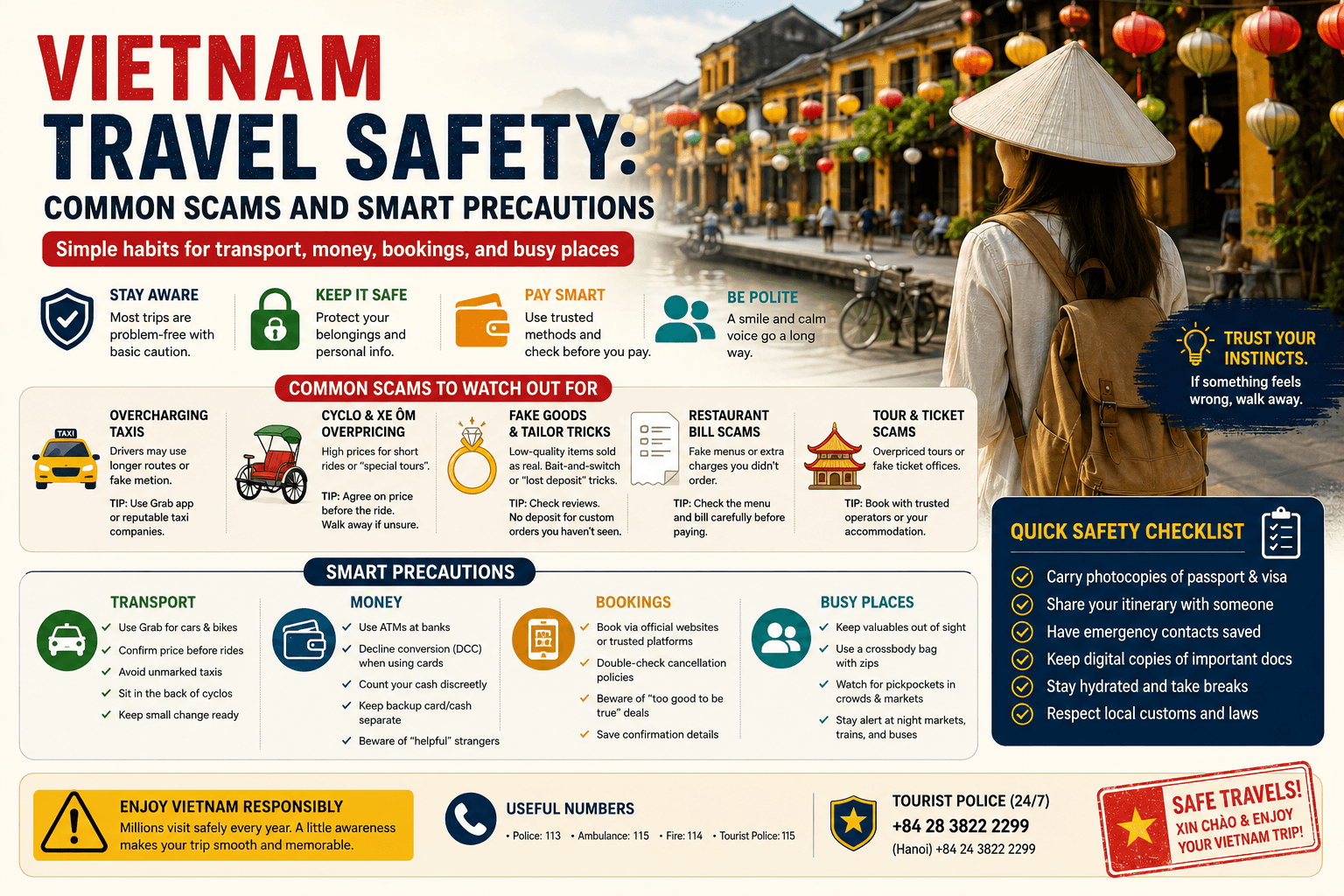
Simple habits for transport, money, bookings, and busy places
Most safety problems are easier to prevent when you slow down, verify details, and keep a backup plan. This practical guide helps you recognize common situations without turning a rewarding Vietnam holiday into a list of worries.

Prepare for ordinary travel risks, then focus on enjoying the people, food, scenery, and culture around you.
Travel safety in Vietnam begins with the same habits that help in any busy destination: protect valuables, use verified services, understand a price before agreeing, and keep your plans accessible offline. Small checks are especially useful at airports, stations, markets, nightlife areas, and crowded attractions, where visitors are often tired or distracted.
A cautious decision does not need to feel confrontational. Take a moment to compare vehicle details, ask a seller to write down the total, or contact your hotel before accepting unexpected help. If something feels rushed or inconsistent, step away and verify it through another channel.

Look for unclear identities, changing terms, and pressure to act before you can check the details.
Transport
A driver may quote a vague price, use an unfamiliar meter, or claim to represent the service you booked. This is easiest to prevent before you enter the vehicle.
Tours & Tickets
A storefront or social account can imitate a known operator, while an unusually low tour price may exclude transfers, tickets, meals, or the experience shown in photographs.
Money
Vietnamese banknotes have large denominations, and rushed transactions make it easier to misread a note, accept the wrong change, or approve an incorrect card amount.
A few repeatable routines protect more than a complicated set of rules.
Step inside a shop entrance or stand with your back away from moving traffic before checking directions. Keep cameras, phones, and loose straps close in crowded areas.
Leave backup cards, excess cash, and non-essential valuables secured at your accommodation. Use a zipped day bag and avoid placing a phone or wallet in an open pocket.
Keep a modest daily amount accessible and store a backup card separately. Use established banks or official exchange counters and cover your PIN when using an ATM.
Before a ride, tour, rental, or service begins, confirm whether the price is per person or total and which fees are included. Save the written confirmation or receipt.
A good booking is easy to identify, understand, pay for, and support after the sale.
Verify the operator through its official website, established booking profile, hotel, or trusted travel adviser. Similar names and logos are not proof of affiliation.
Ask for dates, pickup details, room or cabin type, meal plan, entry tickets, guide language, and exclusions in one written summary.
Use a traceable method when practical, confirm the payee, and keep the receipt. Be cautious when a seller creates urgency or changes the agreed payment channel.
Save a working local contact and know who will help after office hours. Share the itinerary and operator details with someone you trust.
The best backup is secure, separate from the original, and easy to reach when your main device is unavailable.
Save protected digital copies of your passport, visa or entry documents, insurance policy, bookings, and payment-provider contacts. Keep a paper copy of key details separately from your passport, and share your main route with a trusted person.
Download maps and accommodation addresses for offline use. Add the current contact details for your insurer, airline, tour provider, and your country's embassy or consulate. Check official travel advice shortly before departure because local rules, weather, and entry processes can change.
Avoid handing over your passport as a deposit. When a hotel or legitimate service needs to inspect it, understand why it is required and retrieve it promptly. Carry prescribed medicines responsibly and keep their supporting documents with you.
Travel insurance should match the activities on your itinerary. If you plan to ride a motorbike, trek, cruise, or join an adventure activity, confirm licensing, safety equipment, and policy coverage rather than assuming they are included.
A calm sequence protects you, limits further loss, and creates the records needed for support.
Prioritize your physical safety. Do not chase a thief, struggle over property, or continue an argument in an isolated location.
Lock a lost device, block affected cards, change exposed passwords, and save receipts, messages, booking records, vehicle details, and screenshots.
Tell your hotel or tour operator, contact the payment provider or insurer, and report serious incidents to local authorities. Your embassy or consulate can explain consular support.
Ask for a police report or relevant written record when possible, especially if your insurer, bank, airline, or embassy will need proof of the incident.
A well-paced, well-documented route leaves fewer decisions to a tired arrival day.
Start with the site's practical Vietnam packing list so documents, medicines, valuables, and backups stay organized. Then use the Vietnam eSIM and SIM card guide to prepare offline maps and arrival-day connectivity.
Respectful interactions also prevent misunderstandings. Review the Vietnam cultural etiquette guide before temples, homes, markets, and local experiences, then keep the agreed itinerary and provider contacts accessible throughout the trip.
Good travel safety is mostly quiet preparation: verify who you are dealing with, understand the price, protect valuables in busy places, keep independent backups, and know who to contact. These habits create confidence without taking spontaneity out of the journey.
Maya Travels can help you build a clear Vietnam itinerary with confirmed stays, transfers, experiences, and local support.
Plan a Safer Vietnam TripPut this advice into context with Vietnam tour packages from India and Vietnam travel guide for Indian travellers. These resources help connect the article's practical guidance with the right route, travel style, and planning requirements.