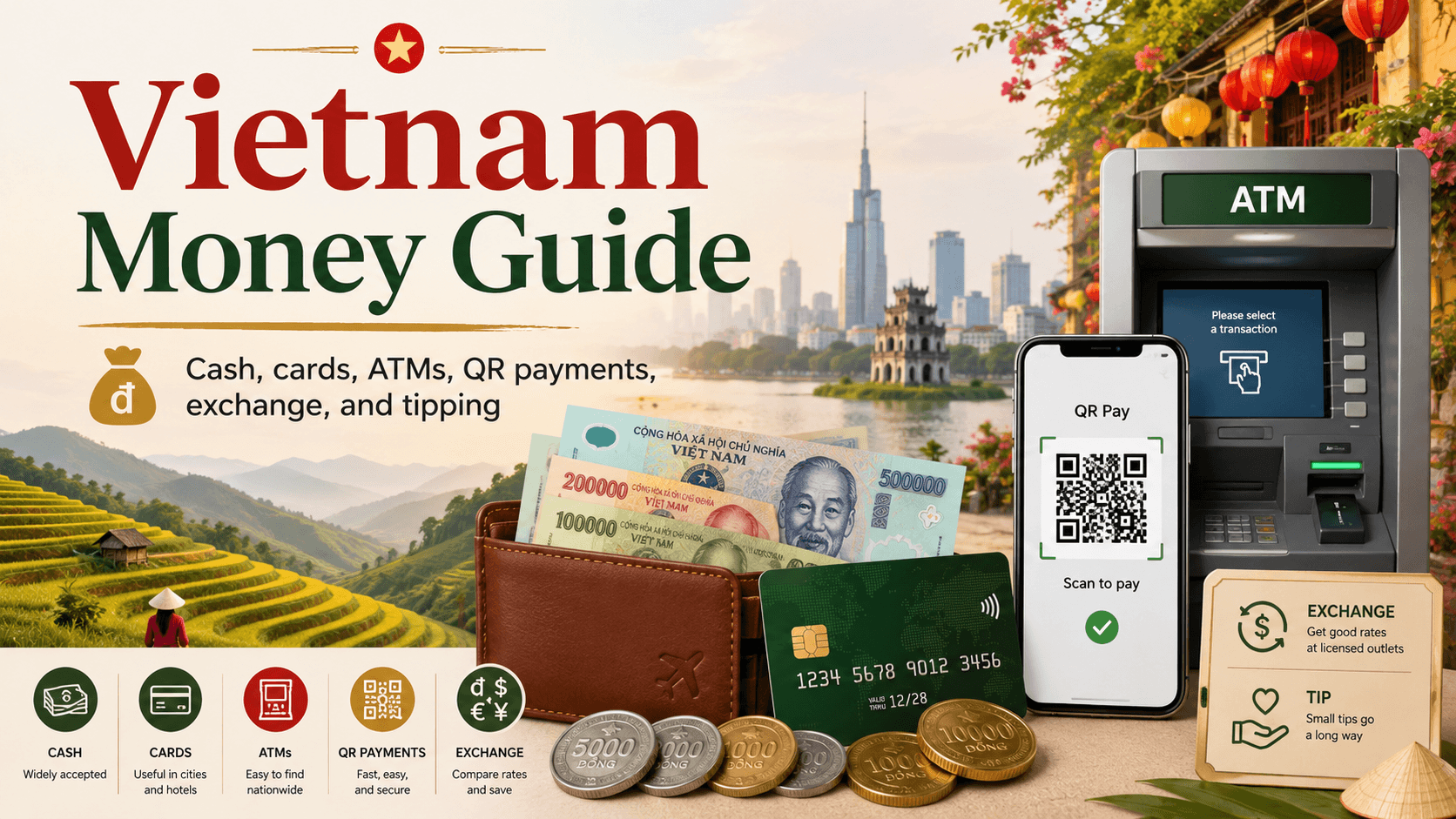

Practical Money Guide

Vietnam Money Guide

Cash, cards, ATMs, QR payments, exchange, and tipping

The easiest way to pay in Vietnam is not to choose one method. Prepare a small cash wallet, a travel-ready card, and a separate backup so a failed terminal, incompatible QR code, or unavailable ATM never controls your day.

Ho Chi Minh City skyline representing money and payments in Vietnam
VNDLocal CurrencyVietnamese đồng is the currency used for local prices
MixCash and CardCarry more than one practical way to pay
BackupPlan for FailureKeep a second card and emergency cash separate
By Maya Travels Team · Published July 14, 2026 · 11 min read

Start With a Mixed-Payment Plan

Vietnam uses the Vietnamese đồng, written as VND or ₫. Cash and cashless payments both matter, and the best balance changes with the merchant, destination, and network connection.

A city hotel may accept an international card while a market stall, family-run café, or rural stop may prefer cash. You may also see QR codes at many counters, but some are designed for local bank transfers and will not work with every foreign app. Ask how you can pay before a purchase, not after it.

Build a simple three-layer system: small VND notes for daily spending, one primary card for suitable merchants, and a backup card plus emergency cash stored separately. This gives you convenience without making the trip depend on a single wallet, device, account, or payment network.

Vietnam flag representing the Vietnamese đồng and local payments

Cash, Card, or QR: What Should You Use?

Treat each method as a tool for a different situation instead of trying to make one option cover the entire holiday.

Everyday Backup

Vietnamese đồng in cash

Cash remains useful for small vendors, local markets, simple cafés, transport, and places where a terminal or network is unavailable. Carry a range of notes so you do not need change from a large denomination.

Best forSmall purchases, markets, tips, and remote stops
CheckThe amount, note denomination, and change before walking away
AvoidKeeping your full cash reserve in one wallet

Larger Purchases

International debit or credit card

Cards are convenient at many hotels, established restaurants, shops, and tour businesses. Acceptance still varies, so ask before ordering or committing to a purchase and keep another method ready.

Best forHotels, tours, restaurants, and planned expenses
CheckCurrency, amount, extra fee, and receipt before approving
AvoidLetting the card leave your sight when a terminal can come to you

Useful but Variable

QR and mobile payments

QR payments are common in Vietnam, but a displayed local bank code does not guarantee that a visitor's foreign banking or payment app can use it. Confirm compatibility before relying on QR as your only option.

Best forMerchants supported by your specific app or bank
CheckMerchant name and amount on your screen before confirming
AvoidScanning an altered, unfamiliar, or unsolicited QR code

Prepare Cards Before Leaving Home

A few issuer checks prevent the most common payment surprises and make it easier to respond if a transaction is declined.

💳

Enable international use

Check that overseas purchases and ATM withdrawals are enabled. Review your issuer's limits, foreign transaction charges, cash withdrawal charges, and travel-notification process before departure.

🔔

Turn on transaction alerts

Enable instant app, text, or email alerts. They help you confirm legitimate charges and contact the issuer quickly if an unfamiliar payment appears.

2

Carry two independent cards

Use cards from separate accounts where possible and store them apart. A second card is valuable if the first is blocked, retained, lost, or temporarily unsupported.

☎️

Save issuer contacts offline

Record the card issuer's international support number and a safe way to identify the account. Do not store a PIN, security code, or full card image in an unsecured note.

How to Use an ATM in Vietnam Safely

Availability, withdrawal limits, and fees vary by machine and issuer. Use the information shown during your actual transaction.

1

Choose a bank-affiliated ATM

Prefer a machine attached to or located inside a bank, airport, shopping centre, or other well-lit managed place. Inspect the card slot and keypad and leave if anything looks loose or unusual.

2

Read every screen

The ATM and your own bank may each apply limits or charges. Review the displayed amount and fee before accepting; cancel if the terms or language are unclear.

3

Understand currency conversion

An ATM or card terminal may offer to convert the transaction into your home currency. Compare the disclosed rate and markup; choosing VND lets your card network or issuer perform the conversion instead.

4

Finish the transaction completely

Shield the keypad, collect the card, cash, and receipt, then move away before organizing money. Check the banking alert and report a retained card or incorrect debit promptly.

Exchange Currency Without Guesswork

Compare the complete deal—the rate, any commission, the notes you receive, and the security of the counter.

Use a bank or clearly authorized exchange counter, and ask how much VND you will receive before handing over money. Count the notes at the counter, keep the receipt, and avoid accepting damaged notes that another merchant may question. Do not follow a stranger to an unofficial exchange because the quoted rate looks unusually attractive.

Exchange only what fits your next stage of travel. Cities and major tourist areas usually provide more options than islands, small towns, or remote routes, so prepare a sensible cash buffer before leaving a well-served area. Never carry the entire trip budget as physical currency.

Keep conversion decisions simple by checking a trusted rate source, then allowing for the provider's disclosed margin or fee. A perfect live-market rate is not normally available at a retail counter, but the final amount should always be clear before you agree.

At a card terminal or ATM, a home-currency option may feel easier to understand, but it is a separate conversion offer. Read its exchange rate and added markup rather than accepting automatically. Paying in VND avoids that particular conversion offer, though your own issuer may still charge foreign-use fees.

Four Money-Safety Habits for Every Day

Slow down at the moment of payment. Most avoidable mistakes happen when a traveler is rushed, distracted, or unsure of the amount.

Count notes slowly

Vietnamese banknotes can be unfamiliar at first. Read the printed denomination instead of judging by colour, and count both payment and change before putting the notes away.

Confirm prices in VND

If a price is spoken or displayed without a currency, ask for the full VND amount. For transport, tours, and market purchases, agree on the total and inclusions before the service begins.

Separate daily and reserve money

Carry only the cash needed for the day in an accessible wallet. Keep reserve cash, a backup card, and identity documents secured separately at your accommodation or on your person as appropriate.

Protect payment credentials

Never share a PIN, one-time password, or card security code with a driver, guide, seller, or caller. Use your own device and trusted network for banking, and type official addresses yourself.

Tipping and Service Charges in Vietnam

Tipping is generally a personal thank-you, not a universal rule. The right approach depends on the service and the bill.

Check whether a restaurant, hotel, spa, cruise, or tour bill already includes a service charge. If it does not, you may tip for attentive service when you genuinely want to. Private guides and drivers are common examples, but the amount should reflect the service, trip length, and your own budget.

Small VND notes are the easiest way to tip directly. Do not feel pressured by a suggested amount that was never disclosed, and do not confuse a voluntary tip with a mandatory fee. A sincere thank-you remains appropriate when you choose not to tip.

Connect Money Planning With the Rest of Your Trip

Payment preparation works best when it is part of your arrival, connectivity, safety, and daily-budget routine.

Use the Vietnam airport arrival guide to plan your first cash withdrawal or exchange stop without delaying the hotel transfer. Set up reliable data with the Vietnam eSIM and SIM card guide so banking alerts and maps are available when you need them.

Review the Vietnam travel safety guide for transport, shopping, and payment precautions. Then build a realistic spending plan with the Vietnam tour budget guide, keeping daily spending separate from emergency funds.

Pay With Confidence, Not Assumptions

A strong Vietnam money plan is deliberately flexible: VND cash for everyday moments, a travel-ready card for suitable merchants, careful ATM and exchange choices, and a separate backup for the unexpected. Confirm each amount and currency, keep alerts active, and never let convenience override payment security.

Maya Travels can create a Vietnam itinerary with transparent inclusions, coordinated transfers, accommodation, and practical support from arrival to departure.

Plan Your Vietnam Holiday
Free Ebook