
1 · Document Control
Present the exact documents for your trip
Use the passport and entry permission connected to your booking. Keep onward travel, accommodation details, and supporting documents accessible in case an officer requests them.
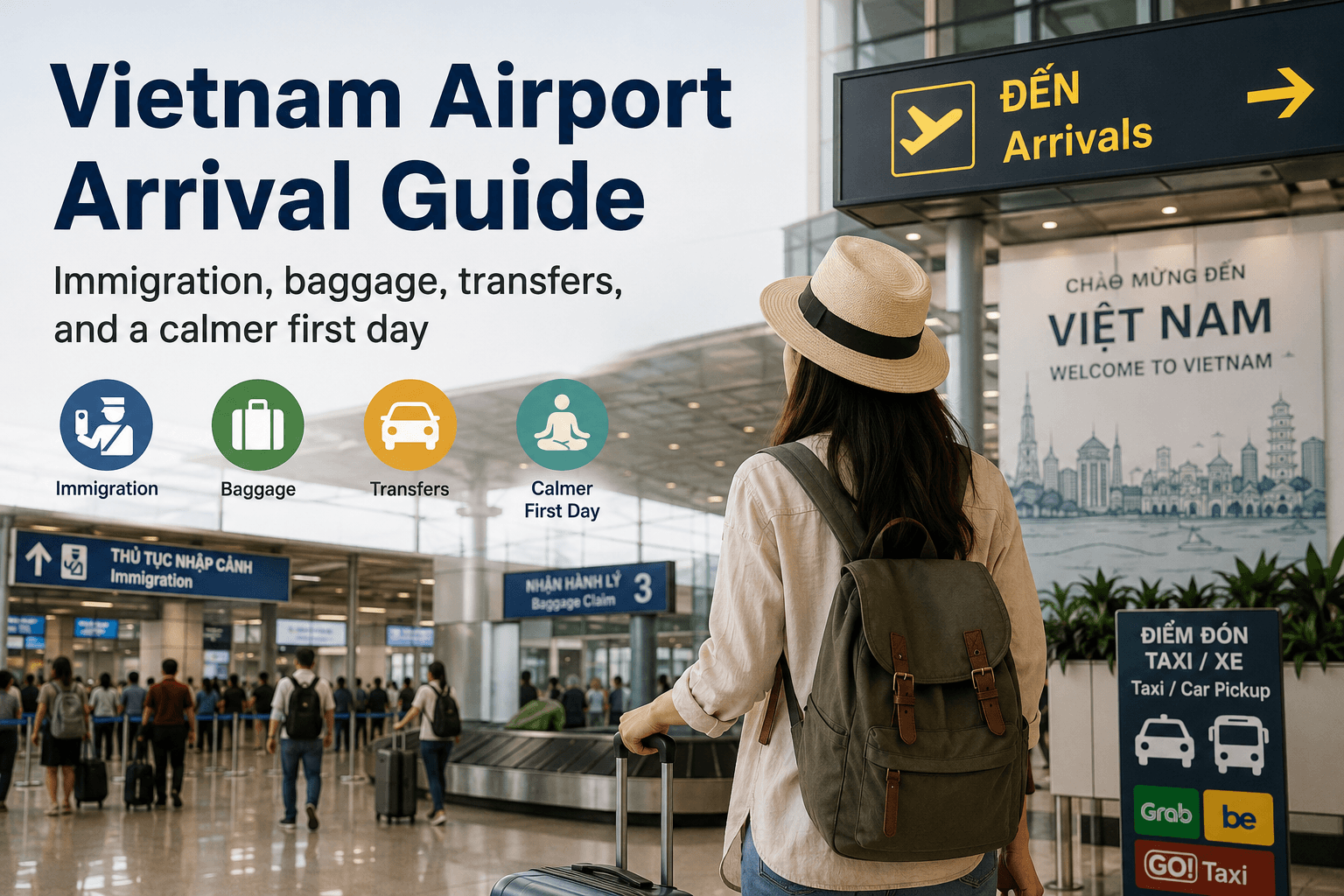
Immigration, baggage, transfers, and a calmer first day
A smooth arrival begins before the flight: organize your documents, save the right addresses, choose a verified transfer, and keep the first day flexible. This guide takes you from the aircraft door to a settled hotel room.

The goal is not to memorize an airport. It is to keep every important detail available when you are tired, offline, or in a busy arrivals hall.
Vietnam's major international gateways serve different regions, so confirm the airport, terminal, and city on every flight and transfer booking. A Hanoi arrival does not use the same road plan as Ho Chi Minh City or Da Nang, and an airport code is safer to share than a city name alone.
Put your passport, entry document, first hotel address, transfer confirmation, insurance details, and essential phone numbers in one offline folder. Carry a paper backup separately. Shortly before travel, recheck entry rules and airport guidance through official sources because procedures can change.

Follow airport signs and staff instructions, then complete each stage before turning your attention to transport or sightseeing.
1 · Document Control
Use the passport and entry permission connected to your booking. Keep onward travel, accommodation details, and supporting documents accessible in case an officer requests them.
2 · Baggage
Read the airport display for your flight, keep baggage receipts nearby, and check each suitcase before leaving the collection area. Similar bags are easy to confuse after a long journey.
3 · Exit and Pickup
Move past unsolicited offers and use the pickup method you planned. For a pre-booked transfer, confirm the passenger name, driver contact, vehicle registration, destination, and agreed price.
Checked luggage should never contain the only copy of something you need to enter the country or reach your first hotel.
Check the latest official entry requirements before departure. Print or securely save any approval document in a clear format and make sure its details match your passport exactly.
Save the property name, full address, phone number, check-in time, and reservation number. Keep the address in a format you can show a driver without mobile data.
Keep your arrival flight, domestic connection, or onward booking easy to reach. If separate tickets are involved, allow a conservative buffer for formalities, bags, and terminal changes.
Carry policy contacts, prescribed medicine, and supporting paperwork in cabin baggage. Store secure copies separately in case a bag or phone becomes unavailable.
The best option depends on your arrival time, luggage, group size, destination, and comfort with navigating independently.
Best when you want a named pickup, fixed plan, luggage space, and direct hotel support. Confirm where the driver will wait and what to do if your flight is delayed.
Useful for independent arrivals when booked through an official counter, recognized queue, or trusted app. Match the vehicle and driver before entering and confirm how the fare is calculated.
A practical light-luggage option when the route, operating hours, stop, and final walk suit your arrival. Check current details with the airport or transport operator before relying on it.
Helpful for late arrivals, families, groups, or unfamiliar addresses. Ask the hotel to send the driver name, vehicle details, total charge, meeting point, and emergency contact in writing.
A flexible arrival day absorbs queues, traffic, early check-in limits, and travel fatigue without disrupting the rest of the itinerary.
Move to a safe waiting area before setting up mobile data or calling your driver. Use saved instructions and airport Wi-Fi cautiously, avoiding sensitive payments on an untrusted network.
Airport formalities and city traffic can vary. Treat the transfer and check-in as the main arrival task instead of committing to a timed tour or distant attraction.
At the hotel, secure documents, charge devices, drink water, eat a familiar meal, and confirm the next morning's pickup or route while you are still organized.
If energy allows, take a short walk or meal near your accommodation. Save major tickets, long drives, and high-effort sightseeing for a day with a predictable start.
Link documents, connectivity, luggage, and safety into one sequence you can follow offline.
Review the practical comparison of a Vietnam e-visa and tourist visa as a planning overview, then confirm the rules that apply to your passport and trip through official sources. Prepare your cabin bag with the Vietnam packing list.
Set up connectivity using the Vietnam eSIM and SIM card guide, and use the Vietnam travel safety guide to verify drivers, fares, luggage, and payments during the arrival journey.
A reliable Vietnam arrival plan is simple: carry the right documents, follow the airport process, collect and check your luggage, verify the transfer, and give the first day room to breathe. Once you are connected and checked in, the holiday can begin at a comfortable pace.
Maya Travels can arrange a coordinated Vietnam itinerary with clear arrival instructions, transfers, accommodation, and local support.
Plan Your Vietnam ArrivalPut this advice into context with Vietnam tour packages from India and Vietnam travel guide for Indian travellers. These resources help connect the article's practical guidance with the right route, travel style, and planning requirements.