
Vegetarian and Jain Food in Vietnam: A Practical Guide for Indian Travellers
Eat well by explaining ingredients clearly instead of relying on labels alone
Find vegetarian, vegan and Jain-friendly food in Vietnam with ordering phrases, ingredient cautions and planning tips for Indian travellers.
The Short Answer
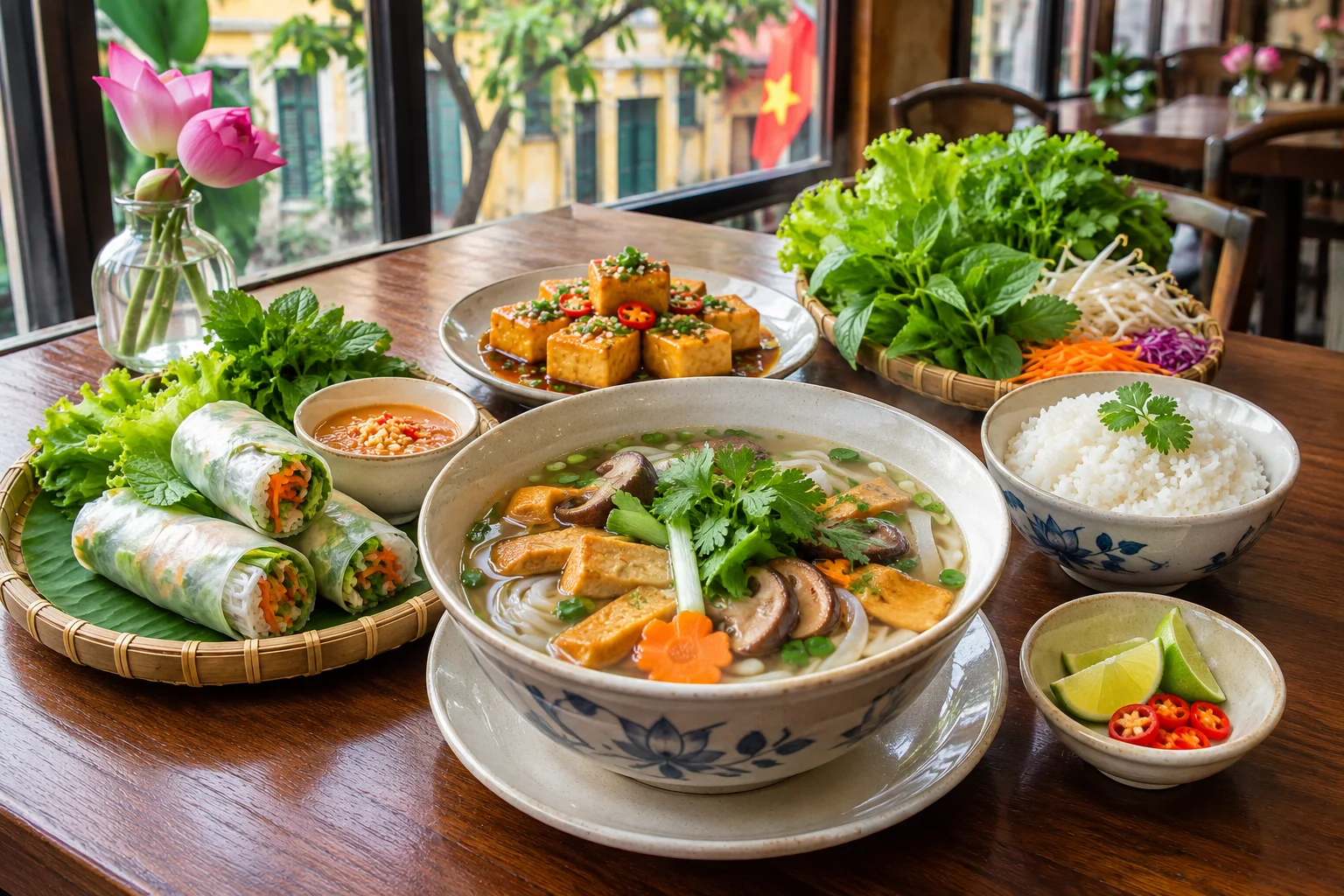
Vegetarian food is widely available in major Vietnamese cities, particularly at restaurants marked chay. However, a dish that appears vegetable-based may still use fish sauce, oyster sauce, meat stock or shared cooking equipment, so travellers with strict vegetarian, vegan or Jain requirements should explain every restriction clearly.
Carry a Vietnamese dietary card that lists what you do and do not eat. For Jain meals, state the exclusion of meat, seafood, eggs and root vegetables individually; the word vegetarian by itself does not communicate onion, garlic, potato or other specific restrictions.
Know what vegetarian labels do and do not mean
Chay commonly refers to Buddhist vegetarian food and is a useful starting point. Some restaurants are fully vegetarian, while ordinary restaurants may offer only a few chay dishes. Vegan expectations can differ, so ask separately about dairy, eggs and honey when these matter.
Indian vegetarian and Jain diets are not automatically understood. A polite, specific explanation works better than a broad label, particularly outside Hanoi, Ho Chi Minh City, Da Nang and Hoi An.
- Ask whether broth or stock contains meat, bones or seafood.
- Ask whether fish sauce or oyster sauce is used in seasoning.
- For allergies, explain cross-contact requirements separately from preference.
Order Vietnamese dishes that adapt well
Pho chay, vegetarian banh mi, tofu with rice, vegetable fried rice and fresh rolls can work well when their sauces and stock are confirmed. Fully vegetarian restaurants reduce the risk of hidden meat ingredients but may still use onion, garlic or root vegetables.
Breakfast buffets are useful for fruit, bread, rice, plain vegetables and made-to-order items. Speak with the kitchen before the busy service period if your meal needs separate preparation.
- Keep packaged snacks for transfers, cruises and early departures.
- Choose accommodation near several suitable restaurants rather than one option.
- Confirm special meals again after hotel check-in.
Plan Jain meals before the itinerary begins
Jain food usually requires more advance coordination because local vegetarian cooking often includes onion, garlic and root vegetables. Send the complete restriction list to the tour operator and hotels in writing, and ask what can realistically be prepared.
A simple meal made from rice, approved vegetables, fruit and lentils may be safer than attempting to modify a complex dish. Travellers observing time restrictions should also communicate required meal times before day tours are confirmed.
- List every excluded ingredient instead of writing only 'Jain food'.
- Ask for separate utensils and preparation when this is essential.
- Carry suitable emergency food for long sightseeing days.
Use a translation card and verify with a person
A saved translation card is helpful when mobile data is unreliable, but it should support a conversation rather than replace one. Show it to the server, ask them to confirm with the kitchen and check the dish again when it arrives.
Dietary needs vary between travellers. Maya Travels can request meals and identify suitable areas, but the restaurant or hotel preparing the food remains the best source for ingredient and cross-contact confirmation.
Continue Planning
Custom Vietnam packages
Build meal requirements into hotels, transfers and sightseeing days.
Vietnamese food guide
Understand regional dishes and local dining culture.
Vietnam family packages
Plan flexible meal stops for children and mixed dietary needs.
Sources: Vietnam Tourism: vegetarian food; Vietnam Tourism: food and experiences. Reconfirm operating hours, weather and transport details before booking.