
Transport hubs
Airports, railway stations, and larger terminals
These are useful opportunities before a flight, train, or coach journey. Facilities may be inside a ticketed area, so use them before leaving the terminal when practical.
Find reliable facilities, carry the right supplies, and travel comfortably
Toilet facilities in Vietnam range from modern restrooms in airports and shopping centres to simple setups at local stops. A little planning, a pocket hygiene kit, and respectful use can make city walks, tours, and transfer days far easier.

The most comfortable strategy is to use a dependable facility before the route becomes busy, remote, or time-sensitive.
Public toilet availability is not identical across Vietnam. Major airports, shopping centres, museums, and larger hotels may feel familiar, while a roadside stop, market, beach, or small business can have a simpler layout and fewer supplies. Cleanliness, accessibility, payment, and opening hours depend on the individual venue.
Do not wait for an urgent need during a long transfer or walking tour. Use the restroom before leaving your hotel, before boarding transport, and when your guide announces a comfort stop. If you are exploring independently, ask staff at a cafe, attraction, or information desk for the nearest toilet.

Start with staffed venues where you can confirm access instead of relying on a map pin that may be outdated or unclear.
Transport hubs
These are useful opportunities before a flight, train, or coach journey. Facilities may be inside a ticketed area, so use them before leaving the terminal when practical.
Commercial venues
Well-staffed venues can be easier to navigate because signs or information desks are usually available. Access rules differ, and a hotel restroom may be intended for guests or customers.
Food and drink stops
A planned meal or drink break can double as a practical restroom stop. Small businesses may have limited facilities, so check before ordering if access is important.
Visitor sites
Many visitor sites provide toilets somewhere within the grounds, but the distance, opening hours, and level of accessibility vary. Ask at the entrance instead of assuming the next section has one.
These compact items cover the most common supply gaps without adding meaningful weight to a day bag.
Carry a small personal supply because toilet paper may be outside the cubicle, issued by an attendant, or unavailable. Take only what you need and keep the rest dry.
Choose a product with at least 60% alcohol for times when soap and water are unavailable. Wash with soap and water when possible, especially when hands are visibly dirty.
Use it for tissues, hygiene products, or wet items only when no suitable bin is available. Dispose of the sealed waste at the next appropriate bin.
Some facilities may charge for entry or supplies. Keep a modest amount of Vietnamese dong accessible, but check the posted amount rather than assuming a standard fee.
Observe the facility, follow its instructions, and leave it ready for the next person.
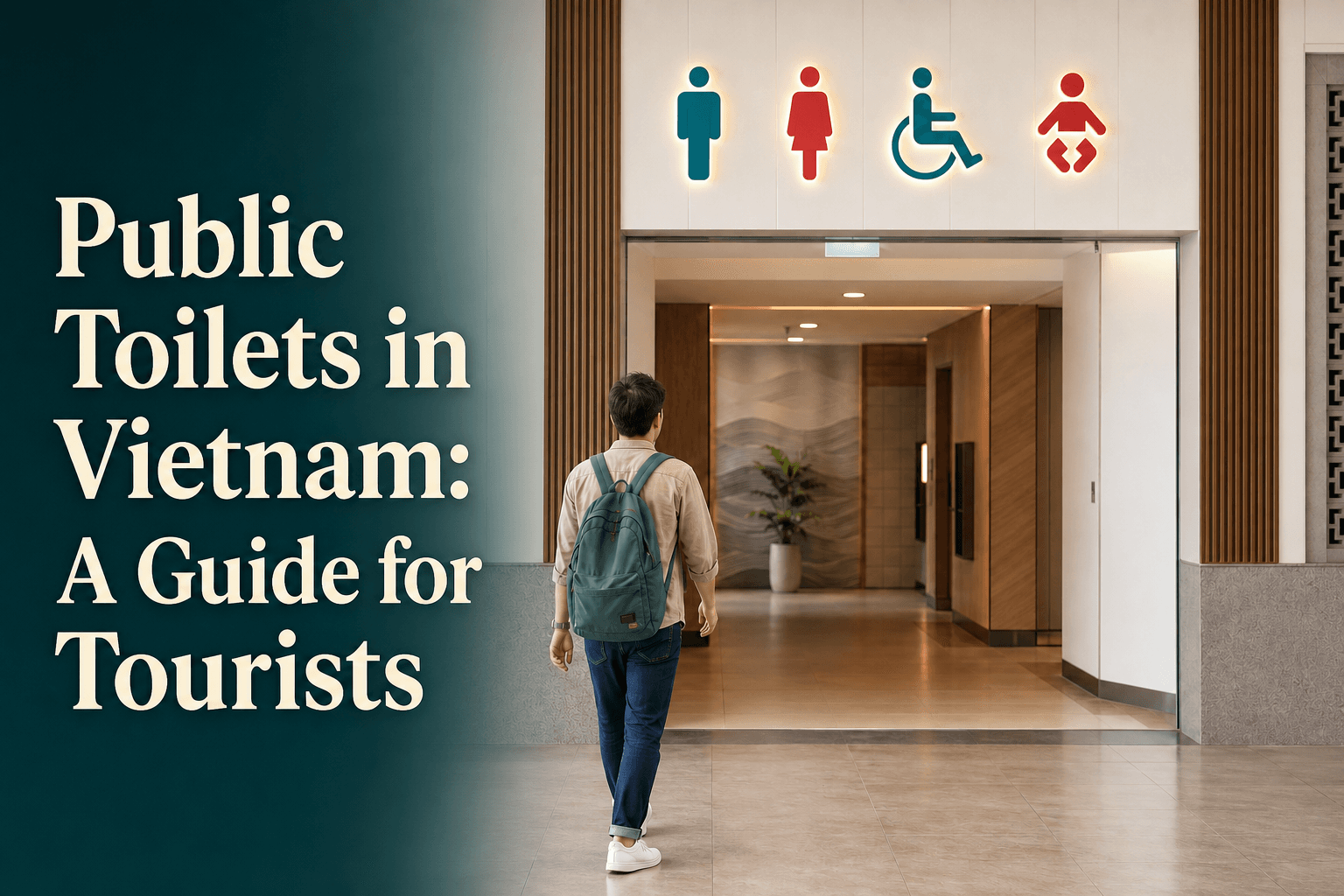
Look for WC, Toilet, restroom icons, male or female symbols, accessibility signs, and any posted fee. If the layout is unclear, ask an attendant rather than guessing.
Notice whether paper is in the cubicle or near the entrance, and check for soap before beginning. Keep personal items off a wet floor or surface.
Use the fixture as designed and follow posted instructions. Some places provide a water spray or dipper, while others use a familiar paper-based setup.
Never flush wipes, sanitary products, nappies, or other solid waste. If a sign asks users to place toilet paper in a bin, follow that instruction too.
Flush, keep water within the intended area, place waste in the correct bin, and alert staff to a blockage, spill, or missing supply when possible.
Use soap and water after the toilet whenever available. If they are not available, use your sanitizer and wash properly at the next suitable opportunity.
Ask specific questions in advance because specialist facilities cannot be assumed at every stop.
Families should carry child-sized essentials, spare clothing, and enough nappies for the full day. Changing tables may not be available, so ask a staff member for a safe, private option. Never use a restaurant table, sink ledge, or walkway as a changing surface, and dispose of nappies only in a suitable bin.
Travelers who menstruate should carry their preferred products for day trips and transport legs. Wrap used products and place them in the marked bin; do not flush them. A small opaque bag is useful when a cubicle does not contain a bin.
If step-free access, grab rails, an adult changing space, or a larger cubicle is essential, contact the hotel, attraction, transport operator, or guide before arrival. Ask about the complete path to the toilet, not only whether an accessible symbol is displayed.
Keep necessary medication and supplies in your day bag rather than checked luggage. Travelers managing a medical condition can share their restroom needs privately with the tour planner or guide so the itinerary includes reasonable breaks.
Different modes of travel need different backup plans.
Use the restroom at your hotel or departure point, then ask the driver or guide when the next planned comfort stop will be. Do not depend on an unverified roadside option.
Use terminal facilities before boarding even when an onboard toilet is expected. Access can be delayed during queues, boarding, turbulence, cleaning, or station stops.
Ask the operator about facilities at the pier, onboard, and at the destination. Carry the small hygiene kit and wear clothing that is practical in a compact space.
Mark a few dependable venues on your map and build a cafe, museum, or shopping-centre stop into the route. Saving an offline map helps when mobile data is weak.
A few related preparations make daily travel easier from arrival through the final transfer.
Add tissues, sanitizer, spare clothing, and personal hygiene supplies to the Vietnam packing list. Review the Vietnam airport arrival guide to plan the first restroom stop before leaving the terminal.
The Vietnam money guide explains how to keep small local currency accessible, while the Vietnam cultural etiquette guide covers respectful behaviour in shared and public spaces.
A reliable toilet plan is simple: use good facilities when they are available, ask before an urgent need, carry a few personal supplies, follow posted instructions, and confirm specialist access in advance. Those habits reduce stress without turning an ordinary travel need into a major part of the itinerary.
Maya Travels can plan well-paced Vietnam routes with coordinated transfers, sensible breaks, and local support for a smoother holiday from arrival to departure.
Plan Your Vietnam HolidayPut this advice into context with Vietnam tour packages from India and Vietnam travel guide for Indian travellers. These resources help connect the article's practical guidance with the right route, travel style, and planning requirements.