
Black coffee
Cà phê đen
Strong and direct, served hot or over ice. Ask whether sugar is added if you prefer it unsweetened.
Best forTravelers who want to taste the coffee without dairy
Know the drink, order with confidence, and leave room to slow down
Vietnamese coffee is not simply a caffeine stop. From the patient phin filter to Hanoi egg coffee and Hue salt coffee, each cup can reveal something about place, routine, and creativity—if you plan the experience rather than rush through a checklist.
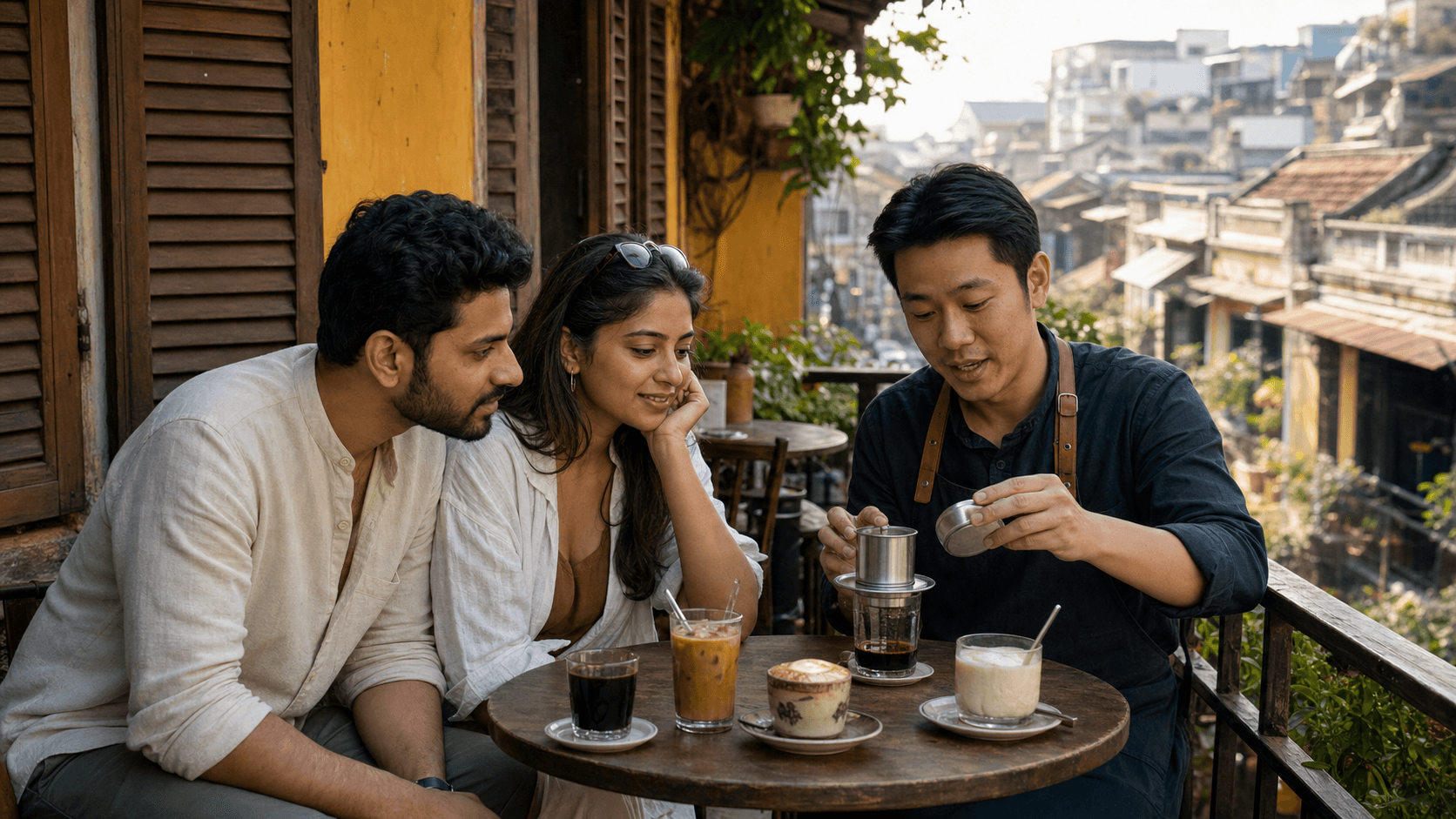
The most useful first lesson is how to pause.
Vietnam’s official tourism website describes the phin as a slow-drip brewing method tied to pause, conversation, and connection. Its current overview also traces distinct regional styles: egg coffee in Hanoi, salt coffee in Hue, coffee-growing context around Da Lat, and traditional and contemporary café culture in Ho Chi Minh City. Read the official Vietnam coffee-culture guide.
For an Indian traveler, the practical question is not “Which famous café should I collect?” It is “Which style suits my taste, diet, caffeine tolerance, route, and time of day?” One thoughtful cup can be more memorable than four rushed stops.
Names are a starting point; recipes still vary by café.
Black coffee
Strong and direct, served hot or over ice. Ask whether sugar is added if you prefer it unsweetened.
Iced coffee with condensed milk
A familiar entry point: intense coffee balanced by sweet condensed milk and ice.
Milk-forward coffee
Usually gentler in coffee flavour and sweeter than cà phê sữa đá, though recipes vary.
Egg coffee
A Hanoi specialty with a creamy topping commonly made from egg yolk, sugar, and condensed milk over strong coffee.
Coconut coffee
Coffee combined with a cold coconut mixture. It can be rich, icy, and sweet; ingredients differ by venue.
Salt coffee
Associated with Hue, balancing coffee with a lightly salty, creamy topping. Confirm dairy and sweetness.
Temperature, sweetness, ingredients, and timing change the experience.
Some drink names imply a style, but confirming “nóng” for hot or “đá” for iced prevents surprises. On a hot day, remember that a chilled drink may be consumed quickly even when the coffee is strong.
Condensed milk, sugar, syrups, coconut mixtures, and toppings can make a drink sweeter than expected. Ask for less sweetness where the recipe can be adjusted.
Egg coffee contains egg and commonly condensed milk. Coconut coffee, salt coffee, and milk-forward drinks may include dairy or prepared mixes. Ask about the complete recipe rather than relying on the English name.
Vietnamese coffee can taste intense, and cup size does not reliably show caffeine content. If you are sensitive, share a drink, order a smaller portion, alternate with water, or choose a non-coffee option.
For food allergies, ask about milk, egg, nuts, coconut, toppings, shared blenders, and utensils. A visually simple drink may still use a prepared base or shared equipment.
Small cafés may prefer cash while larger venues may accept cards or digital payments. Confirm before ordering and keep smaller Vietnamese-dong notes available.
Regional context turns a drink into part of the journey.
Hanoi
Hanoi is an ideal place to watch a phin drip slowly, try egg coffee, and experience cafés tucked into older buildings. Allow time to find entrances and climb stairs rather than squeezing the stop between fixed tickets.
Hue
Hue’s coffee identity includes cà phê muối. Use the stop as a gentle break between heritage visits and ask how the café makes its creamy topping.
Da Lat
Da Lat connects café culture with Vietnam’s coffee-growing story. Travelers can look for transparent sourcing, different roast styles, and experiences that explain the bean-to-cup journey.
Ho Chi Minh City
The city offers everything from simple neighbourhood coffee to contemporary specialty bars. Choose cafés by district so traffic does not turn a relaxed break into a major transfer.
Use the existing Hanoi, Da Lat, Hue, and Ho Chi Minh City pages to compare how each stop fits the wider route.
The plan separates tastings with food, water, walking, and culture.
8:00 AM
Walk before the streets become busier; drink water and eat breakfast rather than beginning with coffee on an empty stomach.
9:30 AM
Order one black or milk coffee and watch the filter process. Ask the server to explain the setup if the café is not busy.
11:00 AM
Use the gap to walk, hydrate, and notice how the coffee affects you before ordering another.
2:30 PM
Treat it as a dessert-like cultural tasting. Confirm egg and dairy, then share one cup if you are managing caffeine or sweetness.
4:00 PM
Choose a quiet window or balcony seat, or skip another coffee and order tea, juice, or water.
Evening
Protect sleep before the next travel day; café-hopping does not require ordering coffee at every venue.
Combine this framework with the two-day Hanoi guide rather than adding every café to one afternoon. Keep offline map pins and an independent connection using the Vietnam SIM and eSIM guide.
Choose whether the stop is for taste, culture, rest, photography, work, or conversation.
Check stairs, narrow entrances, seating, toilets, shade, air-conditioning, and accessibility where relevant.
Confirm ingredients, sweetness, size, temperature, and non-coffee choices before ordering.
Avoid stacking strong coffee late in the day or immediately before a flight, bus, or long road transfer.
Order before occupying a seat, keep calls quiet, ask before photographing staff, and follow house rules.
Confirm accepted methods, keep smaller notes, check the bill, and avoid sensitive activity on public Wi-Fi.
For payment planning, see the Vietnam cash, card, and ATM guide. Travelers with medical allergies should also use the food-allergy guide before visiting cafés.
The best café stop belongs inside a balanced day, not on top of an overloaded itinerary.
VietnamTour.in can design a customized private itinerary with a guided coffee tasting, a relaxed Hanoi café morning, or a Da Lat coffee-focused extension. Private transfers and flexible pacing make it easier to explore without sacrificing meals, sightseeing, or rest.
The team can also share dietary requirements with providers and keep alternatives available for non-coffee drinkers. Specific venues, farm visits, menus, and operating details should always be reconfirmed close to travel.
Cà phê sữa đá is an accessible starting point if you enjoy sweet iced coffee. Choose cà phê đen for a more direct taste, egg coffee for a Hanoi specialty, salt coffee in Hue, or coconut coffee for a cold dessert-like drink.
It may suit travelers who eat egg and dairy, but recipes vary. It is not vegan and may not suit every vegetarian definition. Ask about egg, condensed milk, other dairy, flavourings, and preparation.
Often, but not every component is made to order. Condensed milk or a prepared coconut or cream mixture may already be sweet. Ask before ordering and choose black coffee when you need the clearest control.
Treat public Wi-Fi as untrusted. Avoid sensitive transactions, keep devices updated, and use your own mobile connection where appropriate. The site’s SIM and eSIM guide explains how to plan independent connectivity.
A guided tasting can add context if the provider explains beans, roasting, phin brewing, and regional styles. Check the group size, walking distance, dietary support, included drinks, and how much caffeine the experience involves.
VietnamTour.in can build relaxed café stops, a guided tasting, or a Da Lat coffee experience into a private itinerary while protecting meal times, transfers, and sleep. Specific venues and experiences should be reconfirmed close to travel.
Start with the drink style that suits you, ask about the complete recipe, separate tastings with food and water, and give the phin time to drip. The pause is part of the experience.
Plan a Customized Coffee-Led Vietnam Tour