
Ask what “halal” means at that venue
A restaurant may be certified, use halal-certified meat, offer selected halal dishes, or simply avoid pork. These are different arrangements. Ask for the exact scope rather than relying on a search-result label.
Verify the kitchen, organise the route, and protect difficult meal windows
Finding halal food in Vietnam is becoming easier in major cities, but a reliable plan depends on more than a map search. Learn how to check certification, question the full kitchen process, and fit suitable meals into a realistic itinerary.
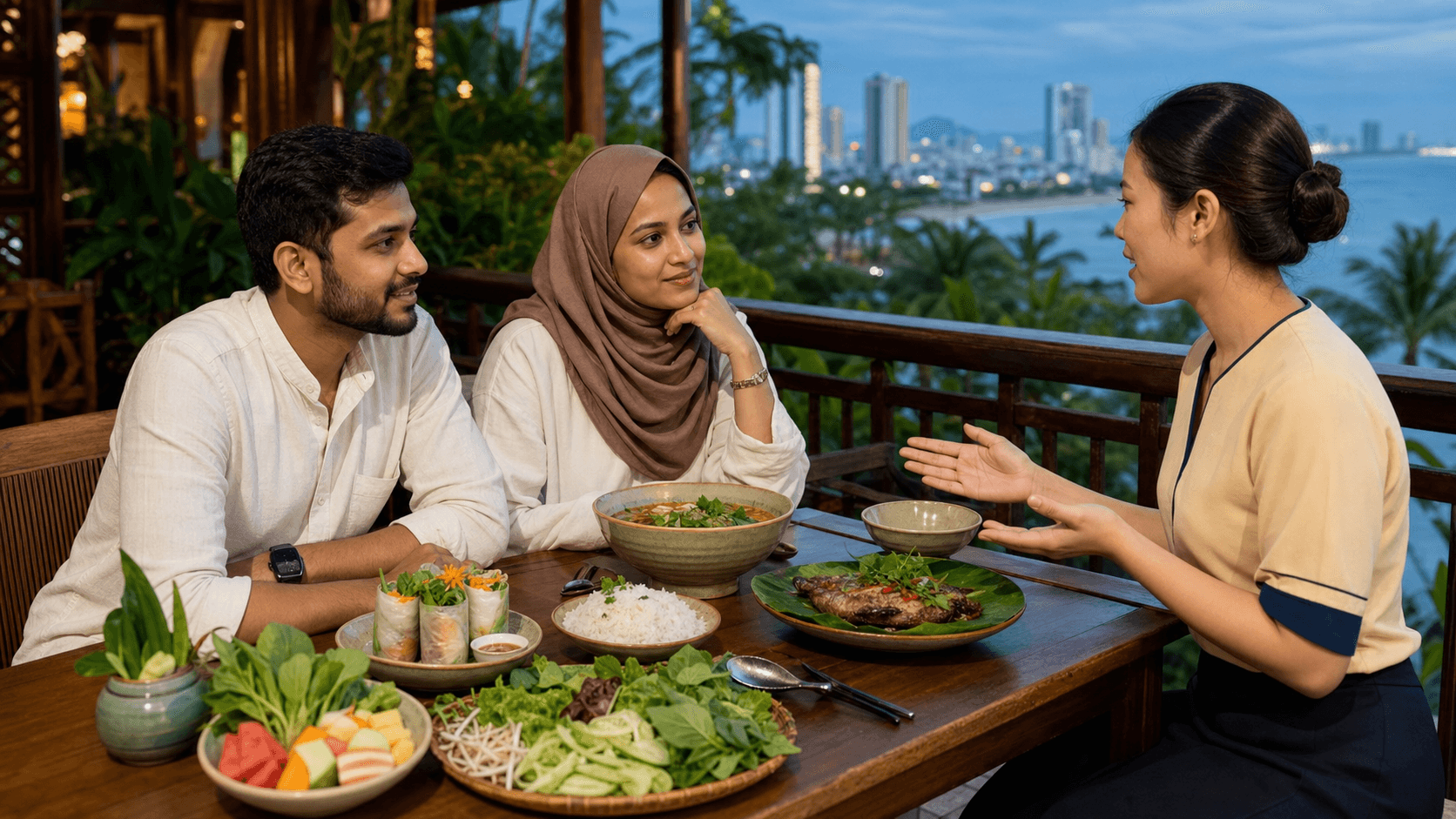
“Halal,” “Muslim-friendly,” and “no pork” may describe very different food systems.
Vietnam’s official tourism website currently identifies Hanoi, Da Nang, and Ho Chi Minh City as major tourism hubs with halal dining choices. Its halal food guide is useful for initial research, but every traveler should confirm the exact venue, certification, branch, menu, and opening details close to the trip.
Before searching, decide what you require. Does the entire premises need certification? Is halal-certified meat in a shared kitchen acceptable? What is your approach to alcohol in cooking, seafood, and shared equipment? A clear personal standard makes restaurant conversations shorter and decisions more consistent.
Repeat it for restaurants, hotels, cruises, cooking classes, and tour meals.
A restaurant may be certified, use halal-certified meat, offer selected halal dishes, or simply avoid pork. These are different arrangements. Ask for the exact scope rather than relying on a search-result label.
When certification is essential to you, ask to see the current certificate and note the certifying body, validity period, premises, and scope. A photo in an old review may no longer describe the restaurant today.
Ask about meat sourcing, alcohol in recipes, stocks, sauces, marinades, cooking oil, utensils, grills, fryers, storage, and preparation surfaces. Decide what level of separation you personally require.
A brand name or hotel group does not guarantee that every outlet operates under the same certification or kitchen system. Verify the exact location you intend to visit.
Opening hours, menus, suppliers, certification, and staffing can change. Contact the venue close to your travel date and again when you arrive.
If the answer is unclear, choose another venue or a permitted packaged meal. A backup protects the day without forcing you to compromise your requirements.
Vietnamese dishes often gain their character from broth, seasoning, sauce, and cooking technique.
Ask whether the meat is halal-certified and whether its preparation remains separate from non-halal items.
Noodle soups and sauces may use meat, seafood, or prepared stock. Verify the base, not only the visible toppings.
Ask about minced fillings, sausages, pâté, crispy toppings, cooking fat, and stocks as well as obvious cuts of pork.
Check marinades, sauces, desserts, extracts, and cooking wine. Explain the standard you follow rather than assuming alcohol always cooks away.
These may suit some halal diets, but cross-contact and added ingredients still matter. Ask about the complete product and preparation.
Clarify whether the fryer, grill, wok, knife, board, utensils, storage, and serving area are shared with non-halal food.
Carry a concise English and Vietnamese dietary card describing the standard you follow. Ask a fluent Vietnamese speaker to review it, store it offline, and keep printed copies. For medical restrictions in addition to halal requirements, follow the separate food-allergy planning guide.
A suitable restaurant is most useful when it fits the day’s geography and timing.
Hanoi
Official tourism material identifies Hanoi as one of Vietnam’s main hubs for halal dining. Save more than one current option, group Old Quarter sightseeing by area, and confirm the exact restaurant before travel.
Da Nang and Hue
The Vietnam National Authority of Tourism reported continued development of halal-certified dining and Muslim-friendly amenities in Da Nang and Hue. Treat that as planning context, then verify each service individually.
Ho Chi Minh City
Vietnam’s official tourism website highlights Ho Chi Minh City as another major halal-food hub. Traffic makes location important, so pair meals with nearby attractions instead of crossing the city repeatedly.
Cruises, islands, and rural trips
Remote excursions may have fixed menus and fewer alternative kitchens. Send the requirement in writing before booking, ask who prepares the meal, and carry a permitted backup if the process cannot be verified.
The Vietnam National Authority of Tourism reported in 2025 that Da Nang and Hue were developing halal-certified dining and suitable religious and lifestyle amenities. Read the official Central Vietnam update. Treat it as evidence of direction, not a promise that every hotel or attraction has these services.
Compare the repository’s existing Hanoi, Da Nang, Hue, and Ho Chi Minh City pages when choosing the route.
This example protects food, prayer, transfer, and excursion windows before adding more sightseeing.
Day 1
Use a confirmed airport transfer and a pre-checked dinner near the hotel; avoid making the first meal depend on a late search.
Day 2
Cluster sightseeing around one confirmed lunch. Keep an offline map pin and a second option in the same area.
Day 3
Request written lunch details from the operator and carry a filling permitted backup for the road journey.
Day 4
Eat before departure if timing is tight. Confirm the evening meal and late check-in arrangement before boarding.
Day 5
Pre-book the meal or carry lunch. Protect enough time for prayer and food checks instead of overloading the sightseeing schedule.
Day 6
Use the flexible city day for a verified Vietnamese halal meal and reconfirm the next day’s airport transfer.
Day 7
Use a confirmed breakfast and pack permitted travel snacks after checking current airline and security rules.
The example is a decision framework rather than a promise of specific services. Confirm prayer times through a source you trust, ask hotels about suitable space and ablution arrangements, and add realistic traffic buffers. The domestic flights guide can help protect the Hanoi–Da Nang transfer day.
Ask the questions while alternatives are still available.
Confirm breakfast, minibar requests, room setup, nearby food, and whether a suitable prayer space can be provided.
Verify certification scope, kitchen process, exact branch, reservation time, and current contact details.
Ask who selects and prepares the meal, how the requirement is recorded, and what happens if the venue changes.
Protect prayer and meal time around flights, long drives, cruises, and fixed group departures.
Check current airline, security, accommodation, and Vietnamese customs rules for every product you plan to carry.
Save confirmations, certificate details, addresses, map pins, dietary cards, and provider contacts without relying on mobile data.
Add permitted snacks, a reusable water bottle, offline documents, and clothing appropriate for planned religious or cultural visits to the Vietnam packing checklist. For respectful interactions at religious and cultural sites, see the cultural etiquette guide.
Coordination is most valuable when several needs must fit the same travel day.
VietnamTour.in can design a customized private itinerary with realistic meal and prayer windows, share written requirements with hotels and local guides, cluster sightseeing near suitable options, and arrange private transfers that reduce unnecessary waiting or detours.
The team can also plan a backup for cruises, day trips, and domestic-flight days. Certification and kitchen processes remain the responsibility of each provider, so travelers should review the evidence and make the final decision themselves.
Yes, particularly in major visitor hubs. Vietnam’s official tourism website currently highlights options in Hanoi, Da Nang, and Ho Chi Minh City. Availability is not the same as suitability for every traveler, so verify the certificate, kitchen process, exact branch, and current operating details.
No. A no-pork dish may still involve non-halal meat, alcohol, stock, lard, or shared equipment. Ask what the venue means by halal and check the complete preparation against the standard you follow.
It may be an option for some travelers, but vegetarian does not automatically address alcohol, shared utensils, or other preparation concerns. Verify the recipe and kitchen arrangement rather than relying only on the menu label.
Use them to create a shortlist, not as final verification. Posts can outlive certificates, branches, menus, and opening hours. Contact the exact venue directly shortly before visiting.
Ask who prepares the meal, whether the kitchen or caterer is certified, what separation is possible, and how requests are documented. Confirm before paying and carry a permitted backup when the answer does not meet your needs.
VietnamTour.in can build meal and prayer time into a private itinerary, share written requirements with hotels and guides, coordinate suitable transfers, and plan backups on excursions. Travelers should still make the final suitability decision and reconfirm each venue.
A Muslim-friendly Vietnam trip becomes easier when you define your standard, verify the exact kitchen, keep meals close to the route, and protect uncertain travel days with a suitable backup.
Plan a Muslim-Friendly Private Vietnam TourPut this advice into context with Vietnamese food and culinary guide, Vietnam tour packages from India and Vietnam travel guide for Indian travellers. These resources help connect the article's practical guidance with the right route, travel style, and planning requirements.